(206) 707-5830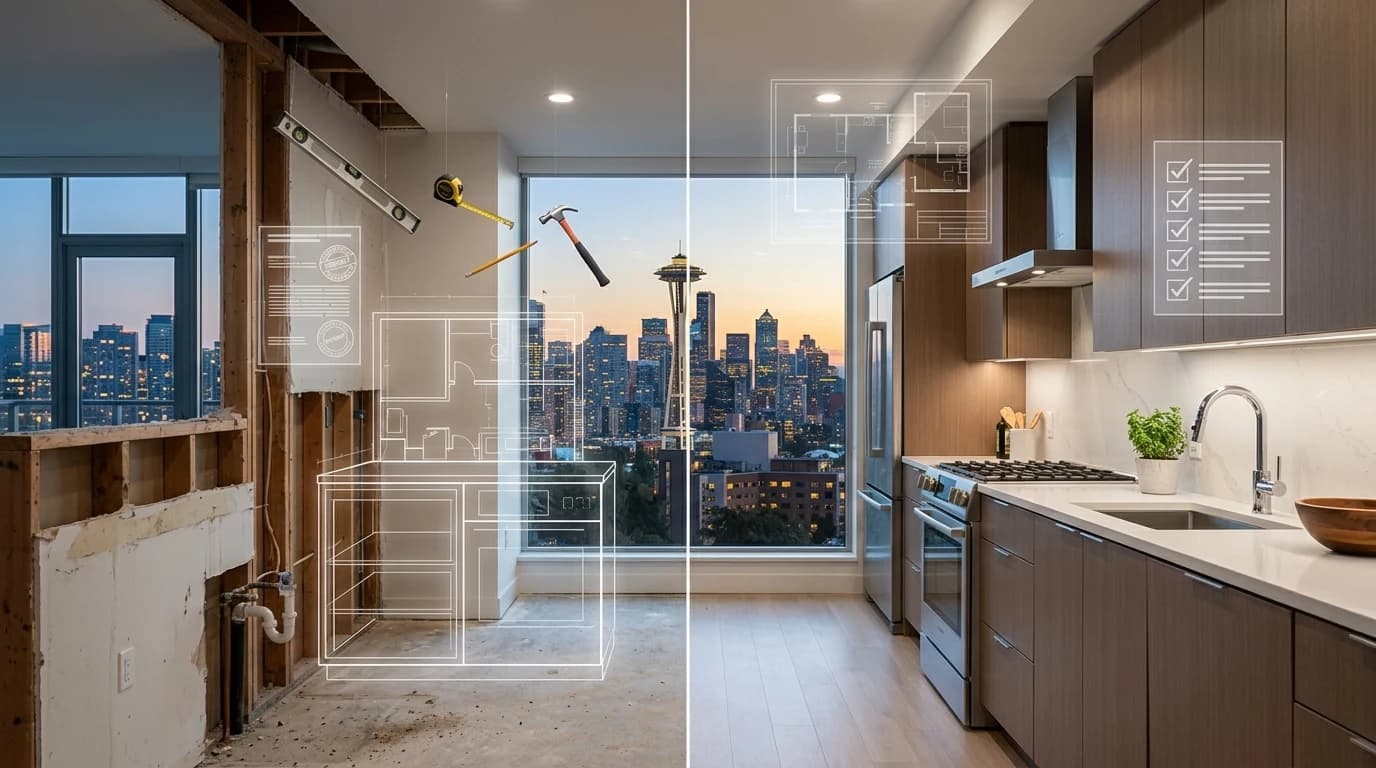

Remodeling a kitchen in a Belltown condo presents a fundamentally different challenge than updating a single-family home. You're not just managing your own space—you're navigating shared walls, building systems, homeowners association rules, and strict ventilation codes that govern downtown Seattle's vertical living. These constraints can derail timelines, inflate budgets, and complicate design choices if you're not prepared. The good news: understanding these unique pressures upfront lets you plan smarter, avoid costly mistakes, and work with contractors who know exactly what to expect.
Quick Answer:
Belltown condo kitchen remodels differ from single-family homes because they require HOA approval, must comply with stricter ventilation and makeup air codes, and face constraints from shared building infrastructure. You'll also deal with noise restrictions, limited construction windows, and potential impacts on neighboring units that don't exist in detached homes.
This guide walks you through the specific planning steps, permit requirements, and design strategies that make condo renovations succeed in Seattle's urban core. You'll learn how to navigate HOA approval for your condo remodel in Seattle, understand ventilation challenges unique to high-rises, and discover design solutions that work within tight footprints and shared systems. Whether you're replacing cabinets or moving plumbing, knowing these realities before you start saves time, money, and stress.
Table of Contents
- Understanding Belltown Condo Kitchen Remodel Costs and Budget Planning
- Navigating HOA Approval and Permits for Your Kitchen Renovation
- Kitchen Ventilation Solutions for Belltown Condos
- Design Ideas for Small Belltown Condo Kitchens
- Choosing the Right Contractor for Your Belltown Kitchen Remodel
- Moving Forward with Your Belltown Condo Kitchen Remodel
Understanding Belltown Condo Kitchen Remodel Costs and Budget Planning
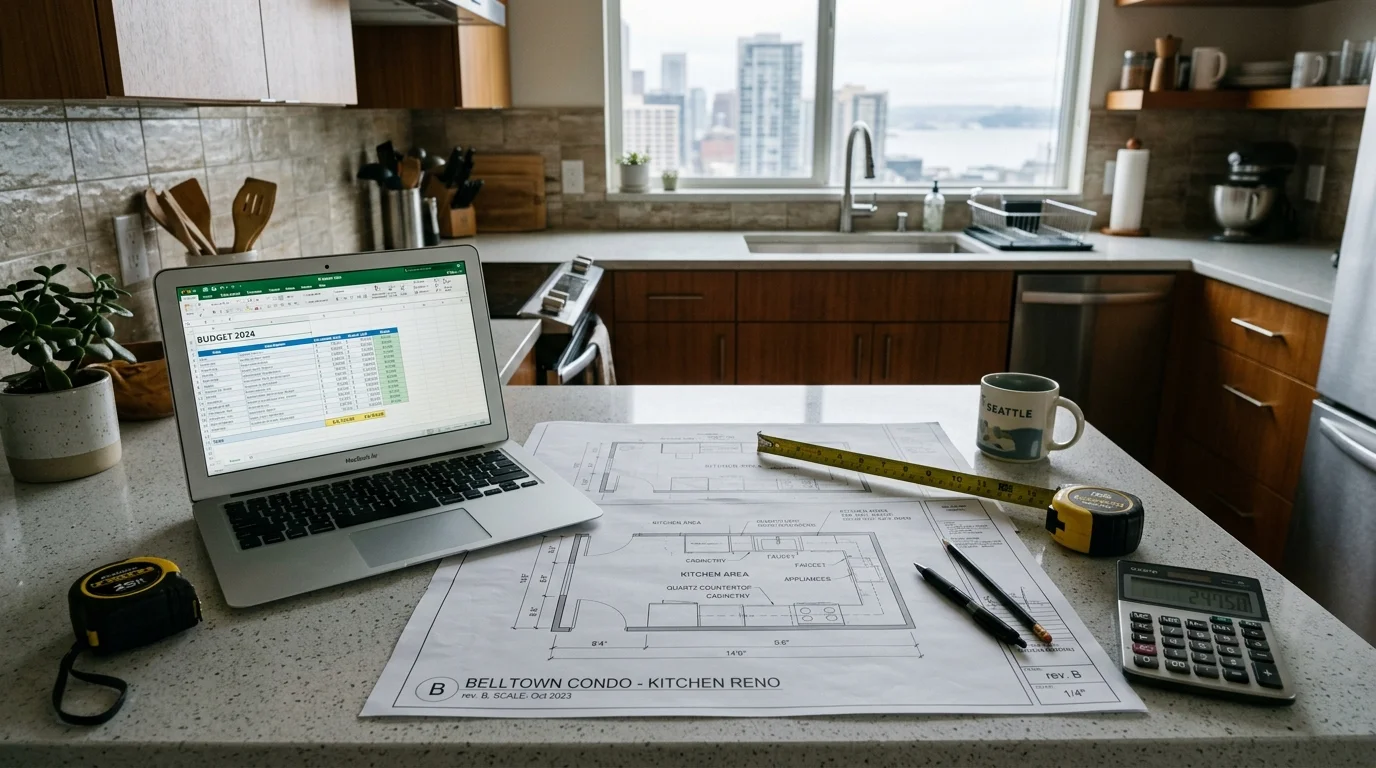
Kitchen remodeling costs in Seattle range from $700 to $1,200 per square foot depending on finishes and scope, with most projects landing between $130,000 and $250,000. But those figures assume a single-family home. Belltown condos operate under a different financial reality—one where shared infrastructure, building restrictions, and HOA requirements add 15–30% to your total budget compared to detached homes.
The condo premium isn't arbitrary. Elevator reservation fees ($150–$350 per use), HOA security deposits ($1,500–$4,000), and application fees ($350–$850) appear before your contractor even orders materials. Labor costs in Seattle already run 20–30% higher than national averages, with licensed electricians charging $90–$140 per hour and plumbers $95–$145 per hour. When those trades must coordinate elevator access, navigate restricted work windows, and manage noise limitations, efficiency drops and hours accumulate.
Budget Tiers for Belltown Condo Kitchen Remodels:
| Scope | Cost Range | What's Included | Timeline |
|---|---|---|---|
| Basic Refresh | $35,000–$65,000 | New cabinets, countertops, appliances, paint, flooring | 6–8 weeks |
| Mid-Range Remodel | $75,000–$130,000 | Above + plumbing relocation, electrical upgrades, backsplash, new lighting | 10–14 weeks |
| Full Gut Renovation | $150,000–$280,000+ | Complete demolition, structural changes, new ventilation, premium finishes, makeup air systems | 16–24 weeks |
The jump between tiers reflects more than material costs. A condo kitchen remodel cost in Seattle balloons when you're moving plumbing lines through shared walls, upgrading ventilation to meet building codes, or installing makeup air systems that single-family homes rarely need. These aren't optional upgrades—they're code requirements that protect neighboring units and the building's envelope.
Hidden costs compound quickly. Permit fees for condo work typically run $800–$2,000. If your building requires a general contractor license and insurance verification, add another $500–$1,500. Drywall patching, dust containment, and temporary kitchen solutions during construction can add $3,000–$8,000 depending on project length.
Start your budget conversation by clarifying scope: Are you refreshing surfaces or relocating utilities? The answer determines whether you're in the $50,000 range or approaching $200,000. Then add 20–25% as a contingency buffer—condo surprises (hidden plumbing, structural issues, code interpretation changes) are common. Understanding these realities upfront helps you align expectations with reality and work with contractors who price condo work accurately rather than underestimate and hit you with change orders later.
Navigating HOA Approval and Permits for Your Kitchen Renovation
Belltown condo kitchens operate under a dual-approval system: your HOA board must sign off on the project, and the City of Seattle requires permits for work affecting building systems or exceeding cost thresholds. These aren't bureaucratic hurdles—they exist to protect your building's structural integrity, fire safety, and the comfort of neighbors sharing walls with you.
Understanding HOA Remodeling Rules
Most Seattle condo associations maintain architectural review guidelines that govern kitchen renovations. Common restrictions include noise hours (typically 8 a.m. to 5 p.m., weekdays only), dust containment requirements, and approval of exterior modifications like new venting. Some buildings restrict cabinet colors or countertop materials to maintain aesthetic consistency. Your HOA remodeling rules in Seattle condos often require detailed plans—floor layouts, electrical schematics, ventilation designs—before the board votes. Request your building's architectural guidelines and past approval decisions; they reveal what the board prioritizes and what's likely to face pushback.
Seattle's Permit Requirements
According to Seattle Department of Construction & Inspections, condo remodel permits in Seattle are mandatory if your project costs more than $6,000 in any six-month period, or if it touches load-bearing walls, ventilation systems, the building envelope, or fire-rated assemblies. Relocating plumbing, upgrading electrical capacity, or installing a new range hood all trigger permit requirements. These aren't optional—inspectors will catch unpermitted work during final inspections or when selling.
Step-by-Step Approval Timeline
- Gather HOA documentation (1 week): Request architectural guidelines, past kitchen approvals, and the board's meeting schedule.
- Prepare detailed plans (2–3 weeks): Work with your contractor to create floor plans, electrical/plumbing layouts, and ventilation specs that address HOA concerns.
- Submit HOA application (1 day): File with your building management; most boards review applications at monthly meetings.
- Receive HOA approval (2–4 weeks): Straightforward projects typically clear in this window, though complex renovations can stretch to 8–12 weeks depending on board schedules and requested revisions.
- Apply for City permits (1 day): Submit to Seattle's Department of Construction & Inspections with approved HOA plans.
- City permit review (2–8 weeks): Simple permits clear in 2–3 weeks; complex projects requiring full plan review take up to 8 weeks.
- Receive permits and begin work (1 day): Once issued, you're cleared to start construction.
Delays often stem from incomplete documentation. Submit thorough plans upfront rather than resubmitting after rejections. Building this timeline into your project schedule prevents the frustration of contractor standby costs and extended timelines.

Kitchen Ventilation Solutions for Belltown Condos
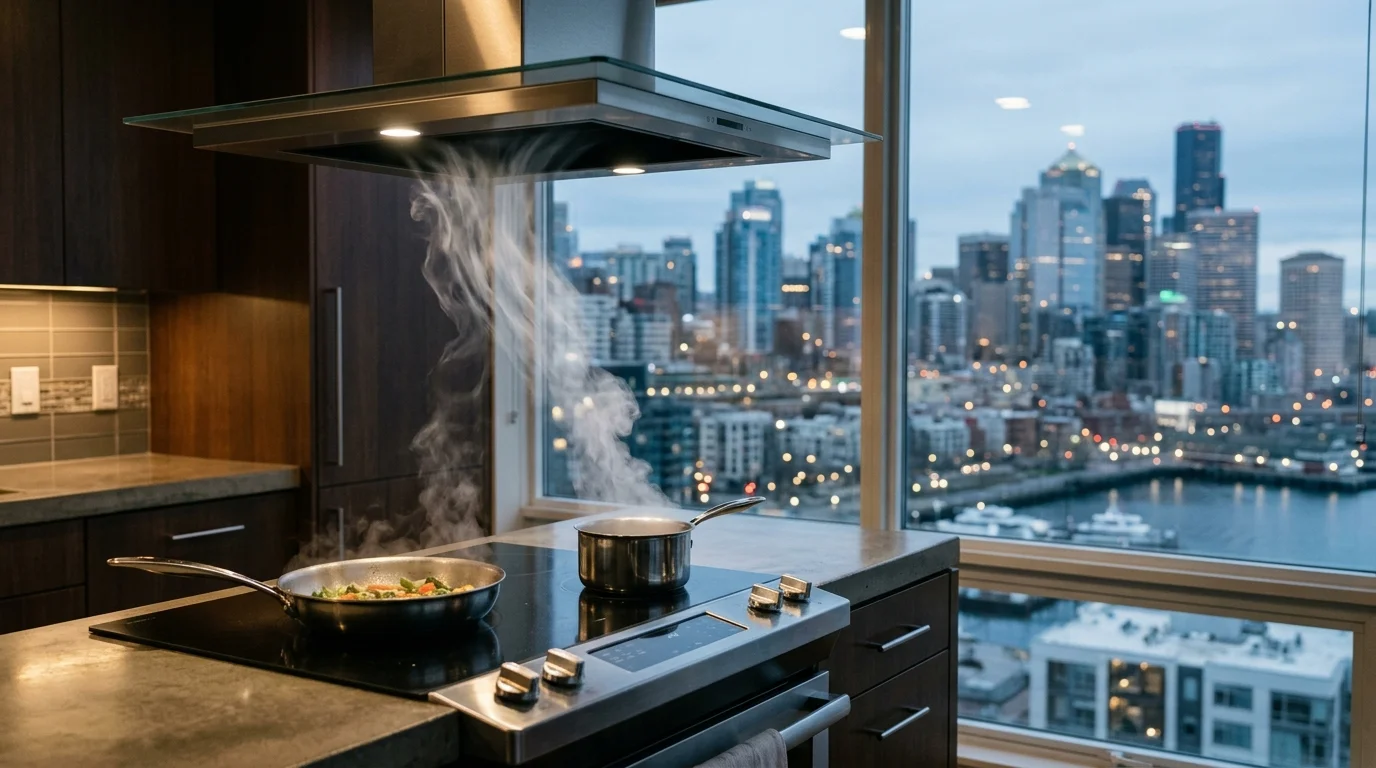
Kitchen ventilation in high-rise Belltown condos presents a unique constraint that fundamentally shapes your remodel design. Unlike single-family homes where ducting to the exterior is straightforward, condo units—especially those above ground level—face building codes and structural limitations that make traditional vented range hoods impractical or impossible. This challenge demands early planning and a clear understanding of your viable options before finalizing your kitchen layout.
The core issue stems from Seattle's building codes and HOA restrictions. Penetrating the building envelope with new ductwork requires structural approval, fire-rating compliance, and coordination with shared mechanical systems. Many Belltown buildings simply prohibit individual ducting through exterior walls. This reality makes ventilation strategy a critical design priority in any condo kitchen remodel in Seattle.
| Ventilation Type | Cost Range | Effectiveness | Best For |
|---|---|---|---|
| Ductless Range Hood | $50–$500 | Moderate (recirculates air) | Budget-conscious, rental-friendly units |
| Ducted to Existing Shaft | $300–$1,200 | High (vents outside) | Buildings with shared exhaust systems |
| Makeup Air System | $800–$2,500 | High (balanced ventilation) | Premium remodels, code compliance |
| Downdraft Cooktop | $400–$2,000 | Moderate | Island layouts, space-constrained kitchens |
Ductless range hoods offer the most accessible entry point. According to Bob Vila's comparison, ductless models cost as little as $50 to several hundred dollars, compared to ducted hoods starting at $100 and exceeding $1,000. These units recirculate air through charcoal and mesh filters rather than venting outside, making them ideal when exterior ducting is impossible. The trade-off: they're less effective at removing heat and humidity than true ducted systems.
Ducted solutions work when your building has shared exhaust shafts or permits individual venting. Many Belltown buildings include central exhaust systems designed for kitchen use—check your HOA documentation and building plans before assuming ducting is off-limits. A makeup air system, which draws fresh outside air to replace exhausted kitchen air, ensures code compliance and prevents negative pressure that can affect other units.
Coordinate ventilation choices with your contractor during the kitchen remodel timeline planning phase. Your selection directly impacts electrical rough-in, cabinet layout, and permit requirements. Clarify ventilation feasibility with your HOA before design finalization—this prevents costly redesigns mid-project.
Design Ideas for Small Belltown Condo Kitchens
Small condo kitchens in Belltown demand strategic thinking. With limited square footage—often 80–120 square feet—every design choice must earn its place. The goal isn't just functionality; it's creating a space that feels open, efficient, and visually larger than it actually is.
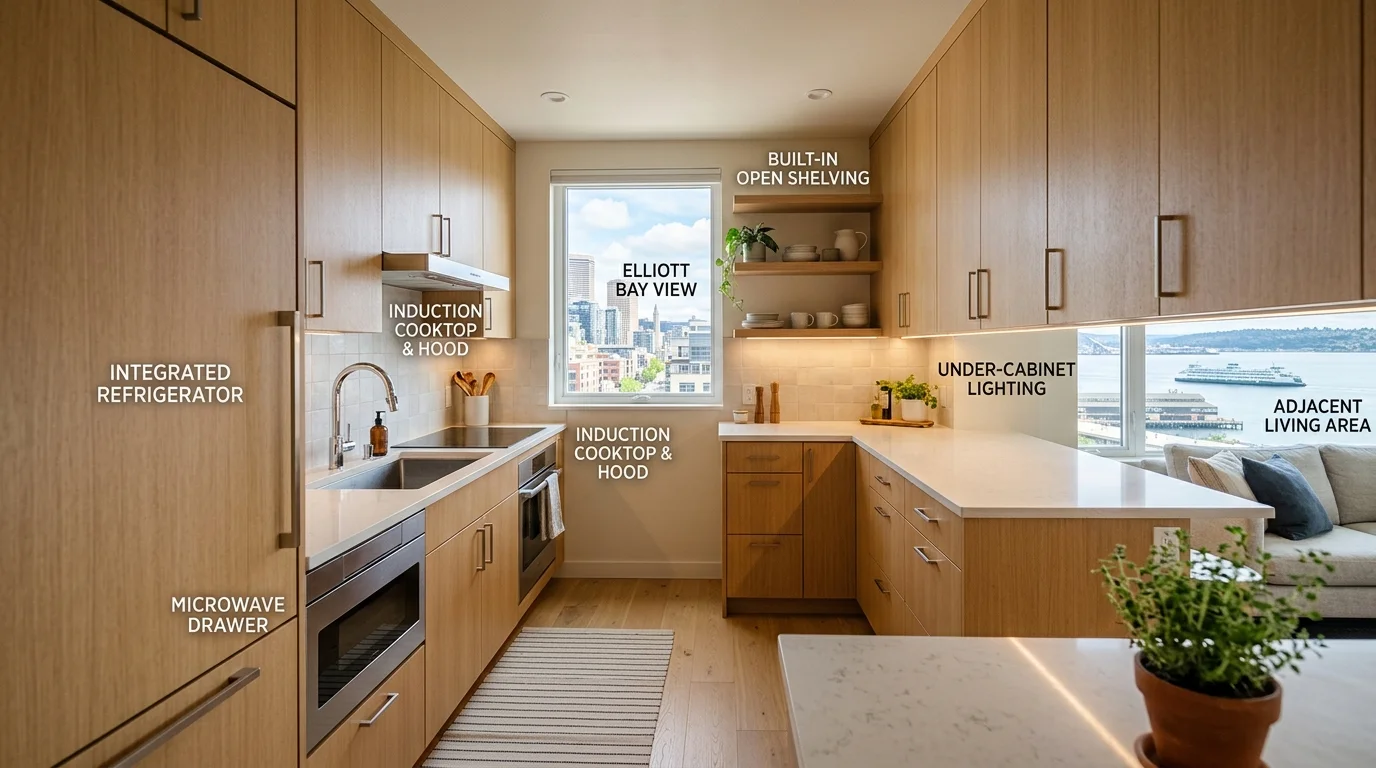
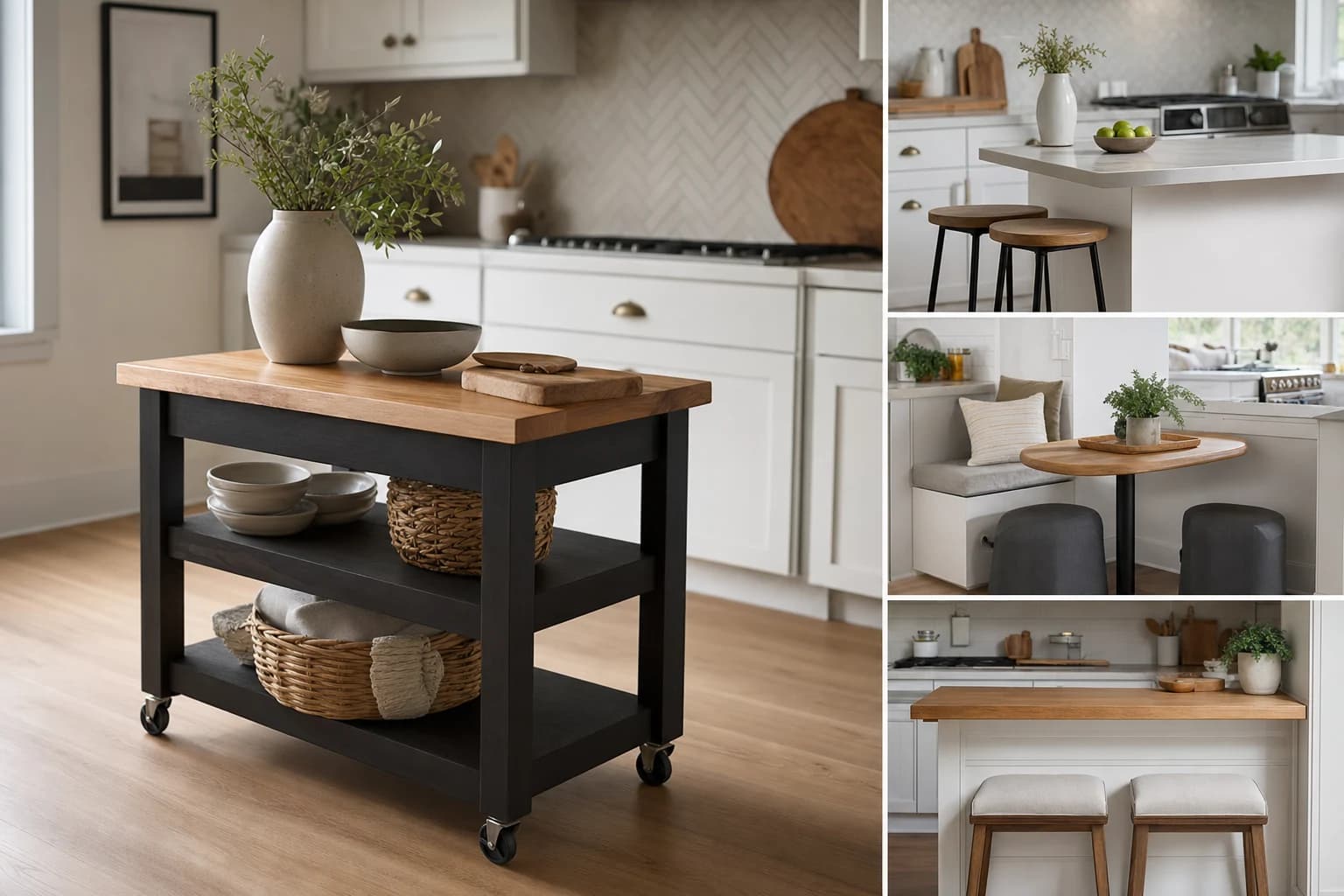
Layout optimization forms the foundation. Galley kitchens with counters on either side, as noted by Sterling Works, keep everything within arm's reach and use space efficiently. L-shaped layouts work when you have a corner to leverage, creating a natural workflow triangle between sink, stove, and refrigerator. Single-wall designs suit ultra-compact units where you're working with one continuous counter—pair this with open shelving or glass-front cabinets above to prevent visual heaviness.
Vertical storage is non-negotiable in small condo kitchen ideas for Seattle. Floor-to-ceiling cabinetry maximizes every inch, while pull-out drawers and deep shelves eliminate wasted dead space. Open shelving above the counter adds visual lightness; closed storage below keeps clutter hidden. Consider a narrow pantry cabinet or tall pull-out spice rack tucked beside the refrigerator.
Lighting and materials make cramped spaces breathe. Under-cabinet LED strips brighten work surfaces and create depth. Light-colored countertops—white quartz, pale wood, or soft gray—reflect light and expand the perceived space. Matte finishes reduce visual noise compared to high-gloss surfaces. A single statement backsplash (subway tile, small hexagon, or soft geometric pattern) adds personality without overwhelming.
Color strategy matters. Soft whites, warm grays, and pale wood tones recede visually, making the kitchen feel airier. A single accent wall or bold backsplash provides character without shrinking the space. Avoid dark cabinetry unless paired with excellent lighting.
When planning your Seattle condo kitchen remodel, coordinate these design choices with your contractor during the kitchen remodel timeline phase. Smart design transforms constraint into opportunity.
Choosing the Right Contractor for Your Belltown Kitchen Remodel
Selecting the right contractor is the single most critical decision in your Belltown condo kitchen remodel. Unlike single-family homes, condo projects demand contractors who understand Seattle's building codes, HOA coordination, and the logistical constraints of working in multi-unit residential buildings. A contractor experienced with downtown Seattle condo remodels will anticipate problems—noise restrictions, limited loading dock access, shared wall considerations—before they derail your timeline and budget.

What to prioritize when evaluating contractors:
- Washington State licensing and bonding — Verify current contractor license through the Department of Labor & Industries. Bonding protects you if the contractor abandons the project.
- Insurance coverage — Confirm they carry general liability and workers' compensation. Request certificates of insurance naming you as additional insured.
- Condo-specific references — Ask for 3–5 completed kitchen or bathroom projects in Seattle condos. Call these clients directly; ask about HOA approval timelines, permit delays, and how the contractor handled shared-wall noise.
- HOA coordination experience — Your contractor should have submitted architectural review requests before and know exactly what documentation your Belltown building requires.
- Permit knowledge — They should explain the kitchen remodel timeline in Seattle upfront, including permit review windows and inspection schedules.
- Written scope and warranty — Ensure the contract specifies materials, timeline, payment schedule, and warranty terms in writing.
PNW Standard Remodel specializes in exactly this work—Seattle and Eastside condo kitchens with full HOA navigation and permit expertise. Their team understands Belltown's specific building codes and can coordinate with your HOA board from day one, eliminating surprises and delays.
Moving Forward with Your Belltown Condo Kitchen Remodel
A Belltown condo kitchen remodel is an investment in both your home and your lifestyle—but it requires careful orchestration. The key to success lies in understanding the interplay between three critical elements: realistic budgeting (typically $130,000–$200,000+ for a full remodel), navigating the dual-approval system of HOA boards and Seattle permits, and designing within the constraints of high-rise living. Ventilation, layout optimization, and contractor selection aren't afterthoughts; they're foundational decisions that determine whether your project flows smoothly or derails.
The difference between a frustrating remodel and a seamless one often comes down to choosing a contractor who understands Seattle condo-specific challenges. Look for teams with proven experience in Belltown buildings, HOA coordination expertise, and a transparent kitchen remodel timeline in Seattle. PNW Standard Remodel specializes in exactly this work—they handle the architectural review submissions, permit coordination, and HOA communication so you don't have to.
Ready to transform your Belltown kitchen? Book a free estimate with PNW Standard Remodel today. Their team will walk you through costs, timelines, and design possibilities specific to your building and space. Stop wondering; start building.