(206) 707-5830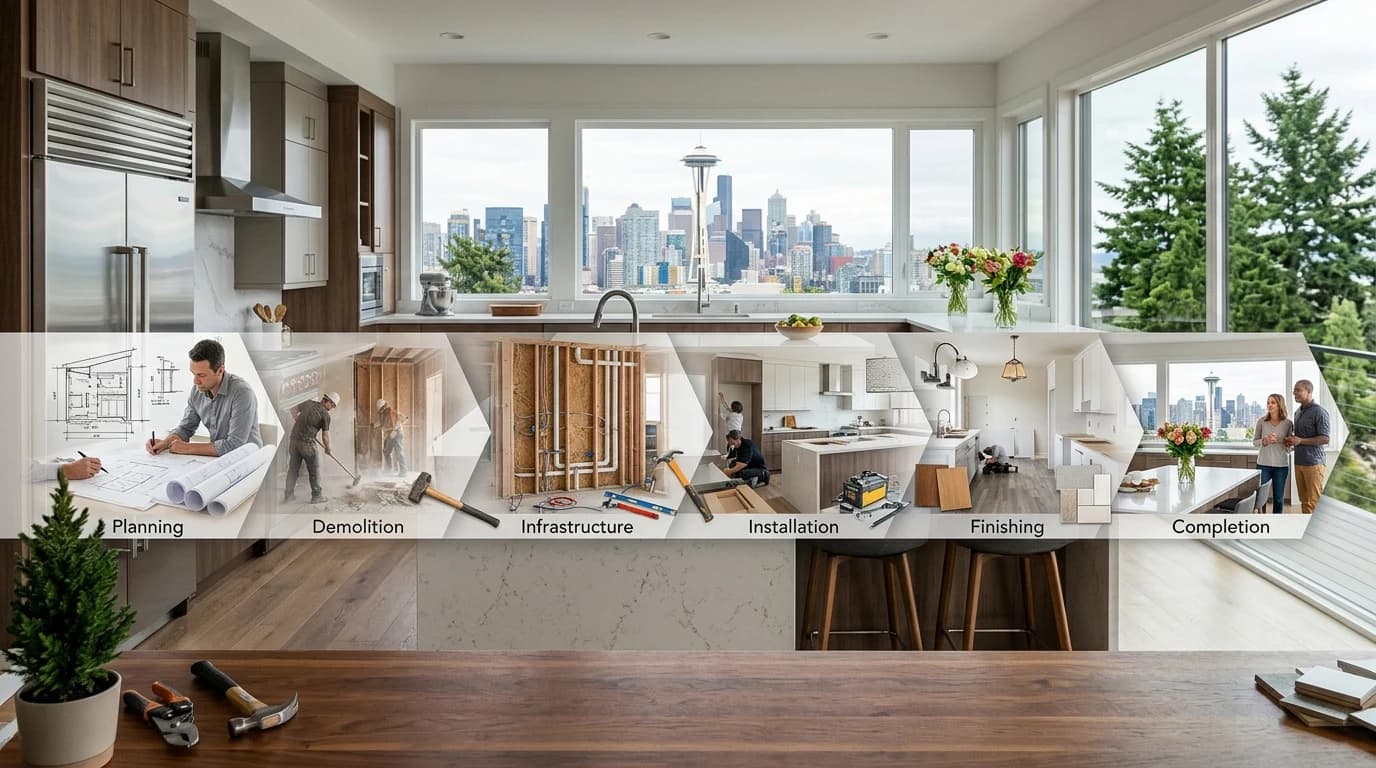

Planning a kitchen remodel in Seattle isn't just about picking out new cabinets and countertops—it's about understanding the unique timeline that comes with this region's building codes, permit requirements, and seasonal considerations. Seattle homeowners often underestimate how long the process takes, only to be surprised by delays that could have been anticipated. The reality is that your remodel timeline depends on several interconnected factors: the scope of work, how quickly Seattle's permit office processes your application, contractor availability, and whether any unexpected issues emerge once walls come down.
Quick Answer: A typical kitchen remodel in Seattle takes 8–16 weeks from start to finish, with permit approval adding 2–6 weeks depending on project complexity. Most of this time is spent waiting for permits and inspections rather than active construction, which usually runs 6–10 weeks. Planning ahead and working with a contractor familiar with Seattle's remodel permit timeline can help you avoid common delays.
This guide walks you through each phase of your kitchen remodel—from initial planning and permits through final inspections and installation. You'll learn where delays commonly happen, what you can control, and practical strategies to keep your project on track. Whether you're adding a new layout, upgrading utilities, or simply refreshing finishes, understanding these phases helps you set realistic expectations and make informed decisions about timing and budget.
Table of Contents
- Typical Kitchen Remodel Phases and Duration in Seattle
- What Factors Extend Your Seattle Kitchen Remodel Timeline
- Strategies to Keep Your Seattle Kitchen Remodel on Schedule
- Kitchen Remodel Timeline by Project Scope
- Frequently Asked Questions About Seattle Kitchen Remodel Timelines
- Planning Your Seattle Kitchen Remodel: Setting Realistic Expectations
Typical Kitchen Remodel Phases and Duration in Seattle
A kitchen remodel unfolds in distinct phases, each with its own timeline and dependencies. Understanding these phases helps you anticipate where delays occur and why Seattle's remodel permit timeline often extends projects compared to other regions.
| Phase | Typical Duration | What Happens |
|---|---|---|
| Design & Planning | 3–4 weeks | Finalize layout, materials, appliances; create detailed plans for permit submission |
| Permit Application & Approval | 2–8 weeks | Submit to SDCI; structural work adds 2–4 weeks; electrical and plumbing permits often pull same-day |
| Demolition | 1–2 weeks | Remove cabinets, counters, flooring, and fixtures; assess hidden damage |
| Rough-In Work | 2–3 weeks | Plumbing, electrical, HVAC, and framing; requires inspections between stages |
| Installation | 3–6 weeks | Cabinets, countertops, appliances, backsplash, flooring; longest active construction phase |
| Final Touches & Inspections | 1–2 weeks | Trim, hardware, paint, final inspection; punch-list items |
Design & Planning sets the foundation. You'll work with your contractor to lock in layouts, material selections, and appliance choices. This phase requires careful decision-making because changes later become expensive. Most delays here stem from indecision rather than external factors.
Permits dominate the timeline. According to official city guidance, standard residential permit processing in Seattle typically takes 2–3 weeks for simple permits and up to 8 weeks for complex ones during initial review. Structural work—moving walls, relocating plumbing—adds another 2–4 weeks to approval. Electrical and plumbing permits can often be pulled over the counter or online by contractors, sometimes same-day. This is why your contractor's familiarity with Seattle Department of Construction and Inspections (SDCI) matters enormously.
Demolition is faster than most homeowners expect. Removing old cabinets, counters, and fixtures typically takes 1–2 weeks. The real wildcard emerges here: hidden water damage, outdated wiring, or structural issues discovered behind walls can add weeks and budget surprises.
Rough-in work—plumbing, electrical, HVAC adjustments, and framing—requires multiple inspections. Each inspection adds a few days of waiting. This phase can't be rushed because code violations discovered later mean costly rework.
Installation is the longest active phase. Cabinets, countertops, appliances, backsplash, and flooring installation typically runs 3–6 weeks depending on complexity and material availability. Supply chain delays for custom cabinets or specialty finishes can extend this significantly.
Final touches and the final inspection after remodel wrap the project. Paint, trim, hardware, and punch-list items take 1–2 weeks. Your final inspection with SDCI ensures everything meets code before you receive your certificate of occupancy.
The critical insight: most of your 8–16 week timeline is spent waiting for permits and inspections, not actively building. Planning ahead and choosing a contractor experienced with Seattle's permit process can compress timelines by 2–4 weeks.
What Factors Extend Your Seattle Kitchen Remodel Timeline
Seattle's permit and inspection requirements are the primary culprit behind extended timelines. According to the Seattle Department of Construction & Inspections, most kitchen remodeling work requires permits—even minor alterations affecting structural integrity, the building envelope, or fire resistance must be approved, regardless of cost. The permit review process itself can take 2–4 weeks, and inspectors conduct multiple site visits throughout construction. Seattle building inspectors actively patrol neighborhoods for unpermitted work, and homeowners face $500-per-day fines for violations. This enforcement culture means contractors can't cut corners, which protects you but extends the timeline.
Material and supply chain delays often determine your actual start date more than anything else. Custom cabinetry typically carries lead times of 8–16 weeks from order to delivery, meaning your kitchen remodel can't begin until cabinets are ordered—sometimes months before demolition even starts. Specialty finishes, imported tile, or custom countertops add similar delays. Weather also impacts deliveries in the Pacific Northwest; winter rain and occasional snow can delay shipments by 1–2 weeks.
Kitchen scope and complexity directly correlate with timeline length. A simple cabinet and countertop refresh takes 6–8 weeks, while a full gut renovation with plumbing and electrical relocations stretches to 14–18 weeks. Larger kitchens require more installation time and more inspections.
Hidden structural problems discovered during demolition are the biggest surprise factor. Finding outdated electrical wiring, water damage behind walls, or rotted framing can add 2–3 weeks as contractors address code violations before proceeding. These discoveries can't be predicted until walls come down.
Contractor availability and scheduling conflicts create bottlenecks, especially during peak seasons (spring and early summer in Seattle). If your contractor is juggling multiple projects, your kitchen waits. Design changes mid-project—swapping cabinet styles, relocating appliances, or upgrading materials—require permit amendments and material reorders, easily adding 2–4 weeks.
Understanding these factors helps you set realistic expectations and work with experienced contractors who navigate Seattle's remodeling landscape efficiently.
Strategies to Keep Your Seattle Kitchen Remodel on Schedule
Delays happen—but many are preventable. The most successful kitchen remodels in Seattle follow a deliberate strategy that eliminates decision-making bottlenecks and keeps momentum steady from permit approval through final walkthrough.
1. Finalize all design and material selections before demolition begins. This is non-negotiable. Once your contractor starts removing walls and cabinets, every material change triggers permit amendments and supply chain delays. Spend the pre-construction phase making final decisions on cabinet styles, countertop materials, appliance models, tile, paint, and hardware. Lock these in writing before the first nail is pulled.
2. Submit permit applications early and partner with contractors experienced in Seattle's process. Yes, you'll need permits for kitchen remodels in Seattle—electrical, plumbing, and structural work all require city approval. Work with a contractor who knows the Seattle Department of Construction and Inspections (SDCI) timeline and can anticipate what inspectors will flag. Early submission means permits clear while materials are being sourced.
3. Order materials immediately after permits are approved. Don't wait. Weather delays and supply chain hiccups are real in the Pacific Northwest. Once you have the green light, place orders for cabinets, countertops, appliances, and specialty items. A two-week lead time becomes critical buffer against unexpected hold-ups.
4. Establish weekly communication checkpoints with your contractor. Schedule a standing call or site visit every Tuesday or Thursday. This catches small issues before they snowball into week-long delays. Discuss what's coming next week, flag any decisions needed, and address problems immediately.
5. Make decisions fast when issues surface. Hidden water damage or outdated wiring will emerge. When it does, decide within 24–48 hours whether to repair, upgrade, or work around it. Hesitation multiplies delays exponentially.
6. Document all changes in writing. Every material swap, timeline adjustment, or scope change gets a written change order. This prevents miscommunication and keeps everyone aligned on what's actually happening versus what was originally planned.

Kitchen Remodel Timeline by Project Scope
Not all kitchen remodels are created equal. A homeowner swapping out cabinets and countertops faces a vastly different timeline than someone gutting the space and relocating plumbing. Understanding your project scope is the single best way to predict how long your kitchen will be under construction—and how to plan your life around it.
Seattle kitchens break into three distinct categories, each with its own permit and construction rhythm. The timeline difference between them can be measured in months, not weeks.
| Project Type | Scope | Permit Time | Construction Time | Total Duration |
|---|---|---|---|---|
| Cosmetic Update | Cabinets, countertops, flooring, paint, fixtures (no layout change) | 1–2 weeks | 5–6 weeks | 6–8 weeks |
| Mid-Range Remodel | New layout, minor plumbing/electrical, some structural prep | 2–3 weeks | 10–13 weeks | 12–16 weeks |
| Full Gut Renovation | Complete systems replacement, structural changes, new electrical/plumbing | 3–4 weeks (plus 2–4 weeks for structural permits) | 12–18 weeks | 16–24 weeks |
Cosmetic updates move fastest because they sidestep Seattle's permit complexity. Work that doesn't require permit approval—surface-level finishes, appliance swaps, and cabinet refacing—can begin almost immediately after your contractor submits paperwork. Expect 6 to 8 weeks from contract to completion.
Mid-range remodels introduce layout changes and mechanical work, triggering full permit review. Inspectors examine new electrical circuits, plumbing runs, and structural supports. These projects typically span 12 to 16 weeks. The permit review alone adds 2–3 weeks, but the real time sink is construction complexity—coordinating trades, waiting for inspections between phases, and managing dependencies.
Full gut renovations are the longest haul. Structural permits can add an extra 2–4 weeks before demolition even begins. Once work starts, you're coordinating foundation work, complete system replacement, and multiple inspection cycles. Plan for 16 to 24 weeks minimum. These projects demand the most rigorous project management and weekly communication with your contractor to catch delays before they cascade.
Your actual timeline depends on permit processing speed, material availability, and how quickly decisions get made during construction. The table above reflects typical Seattle conditions—but every project has variables.
Frequently Asked Questions About Seattle Kitchen Remodel Timelines
Do I need a permit for a kitchen remodel in Seattle?
Yes—for most work beyond cosmetic updates. If you're changing electrical circuits, relocating plumbing, altering structural walls, or installing new appliances that require code compliance, the City of Seattle requires a permit. Even cabinet and countertop work often triggers permits if it involves new electrical outlets or gas lines. Skipping permits isn't worth the risk; unpermitted work can create liability issues when selling your home and may violate your homeowner's insurance. The permit cost for a remodel in Seattle typically ranges from $300 to $1,500 depending on project scope, but it's a necessary investment that protects both you and your contractor.
Why do Seattle remodels take longer than national averages?
Seattle's permit review process is thorough. The city's building department conducts multiple inspections—framing, electrical, plumbing, and final—each requiring scheduling and coordination. Add in the Pacific Northwest's rainy climate (which can delay material delivery and outdoor work) and the region's strict energy codes, and timelines naturally extend. Most national averages don't account for these regional requirements.
Can I live in my home during a kitchen remodel?
Yes, but with trade-offs. You'll lose kitchen access during demolition and rough-in phases, so plan for takeout or a temporary cooking setup elsewhere. Dust, noise, and contractor traffic are daily realities. Many homeowners relocate during the heaviest construction weeks (typically weeks 2–4 of a mid-range remodel) and return once cabinets and appliances are installed.
What's the fastest timeline possible?
Cosmetic updates—new paint, hardware, backsplash, and appliance swaps—can wrap in 6 to 8 weeks. These projects typically avoid structural permits, making them the quickest path to a refreshed kitchen.
How long does a bathroom remodel take in Seattle?
Bathroom remodels follow similar timelines to kitchens. A cosmetic refresh takes 4 to 6 weeks, while a full gut renovation spans 12 to 20 weeks, depending on whether you're moving plumbing or reconfiguring the layout.
Planning Your Seattle Kitchen Remodel: Setting Realistic Expectations
A realistic timeline is the foundation of a stress-free remodel. In Seattle, expect cosmetic kitchen updates to take 6 to 8 weeks, while comprehensive gut renovations stretch 6 to 12 months or longer. The difference hinges on permit complexity, structural changes, and material lead times—factors that vary dramatically based on your project scope and the city's inspection requirements.
The permits alone can add 4 to 8 weeks to your start date. Seattle's building department is thorough, and for good reason: compliance with local energy codes and structural standards protects your investment and home's integrity. Quality trumps speed in this market. Rushing through inspections or cutting corners on code compliance invites costly rework down the line.
This is where partnering with an experienced local contractor becomes invaluable. A firm familiar with Seattle's permit process, seasonal weather patterns, and regional material suppliers can navigate delays before they derail your timeline. At PNW Standard Remodel, we've guided hundreds of homeowners through realistic planning—and we understand that your timeline must account for Seattle's unique demands, not national averages.
Ready to set expectations for your specific project? Schedule a free estimate with us. We'll assess your kitchen's scope, walk you through our process, and give you an honest timeline tailored to your goals.