(206) 707-5830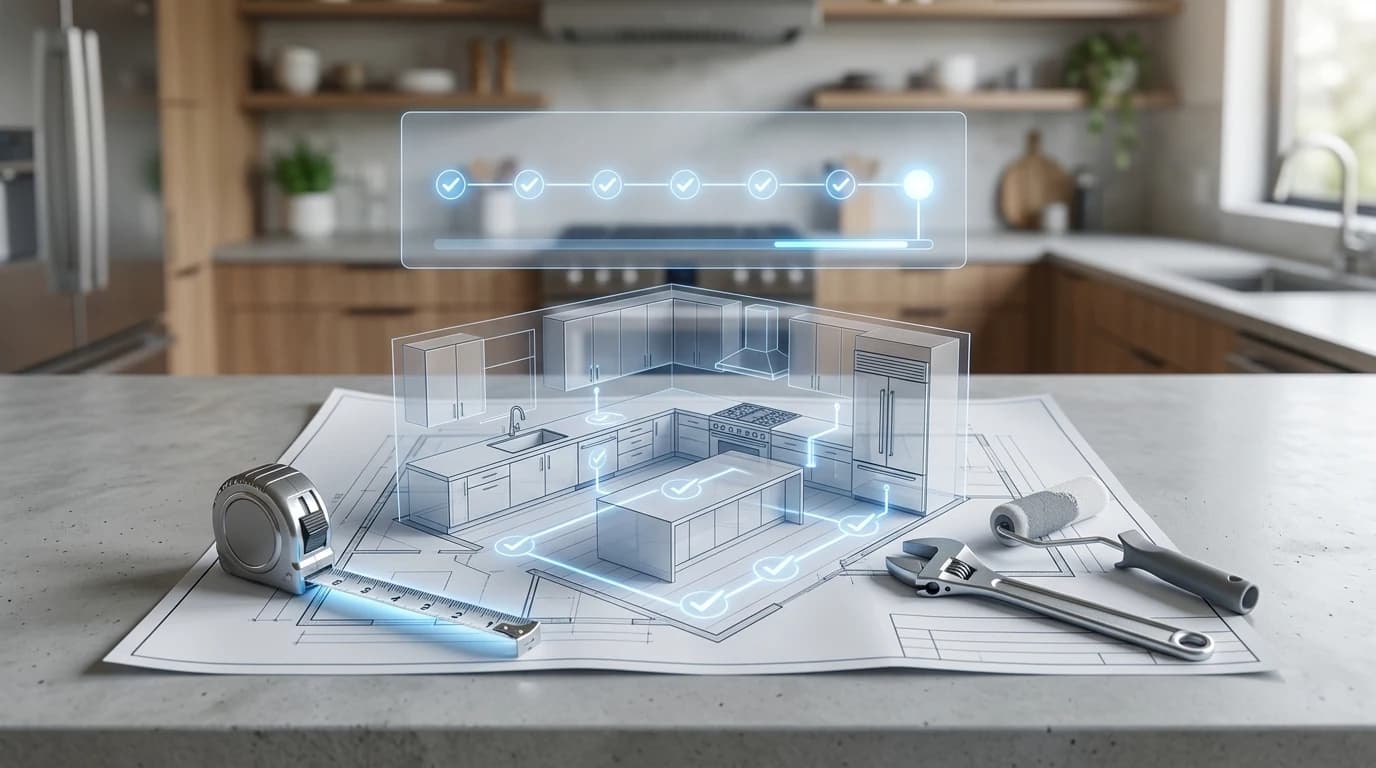

Quick Answer: Yes, most kitchen remodels in Bellevue require permits if they involve structural changes, electrical work, plumbing, or mechanical systems. Even cosmetic updates that touch these systems need approval from the City of Bellevue. Getting permits upfront protects your investment, ensures code compliance, and prevents costly fines or problems when selling your home.
Kitchen remodeling in Bellevue isn't just about design choices and material selections—it's also about navigating local building codes and permit requirements. Many homeowners assume they can skip permits for smaller projects, but Bellevue's regulations are strict, and violations can derail your timeline and budget. Understanding what work requires a permit, how to apply, and what to expect throughout the process saves you headaches and keeps your project moving smoothly.
This guide walks you through Bellevue's permit landscape for kitchen remodels. You'll learn which specific remodeling activities trigger permit requirements, how long the approval process typically takes, what costs to budget for, and the common mistakes that delay projects. Whether you're planning a full kitchen overhaul or targeted upgrades, knowing these requirements upfront helps you plan realistic timelines and avoid expensive rework down the road. The kitchen remodel timeline in Seattle often mirrors Bellevue's process, so understanding local requirements is essential to staying on schedule.
Table of Contents
- Kitchen Remodel Work That Requires a Permit in Bellevue
- Kitchen Work That Does NOT Require a Bellevue Permit
- The Bellevue Kitchen Permit Application Process: Step-by-Step
- Bellevue Kitchen Permit Timelines and Costs
- Common Permit Mistakes That Delay Bellevue Kitchen Remodels
- Getting Your Bellevue Kitchen Permit Right the First Time
Kitchen Remodel Work That Requires a Permit in Bellevue
Not every kitchen upgrade triggers permit requirements, but understanding which ones do is essential to staying compliant and avoiding costly delays. Bellevue's building department takes a practical approach: cosmetic changes generally don't need permits, but anything affecting structure, safety systems, or utility infrastructure does.
Structural and Load-Bearing Changes
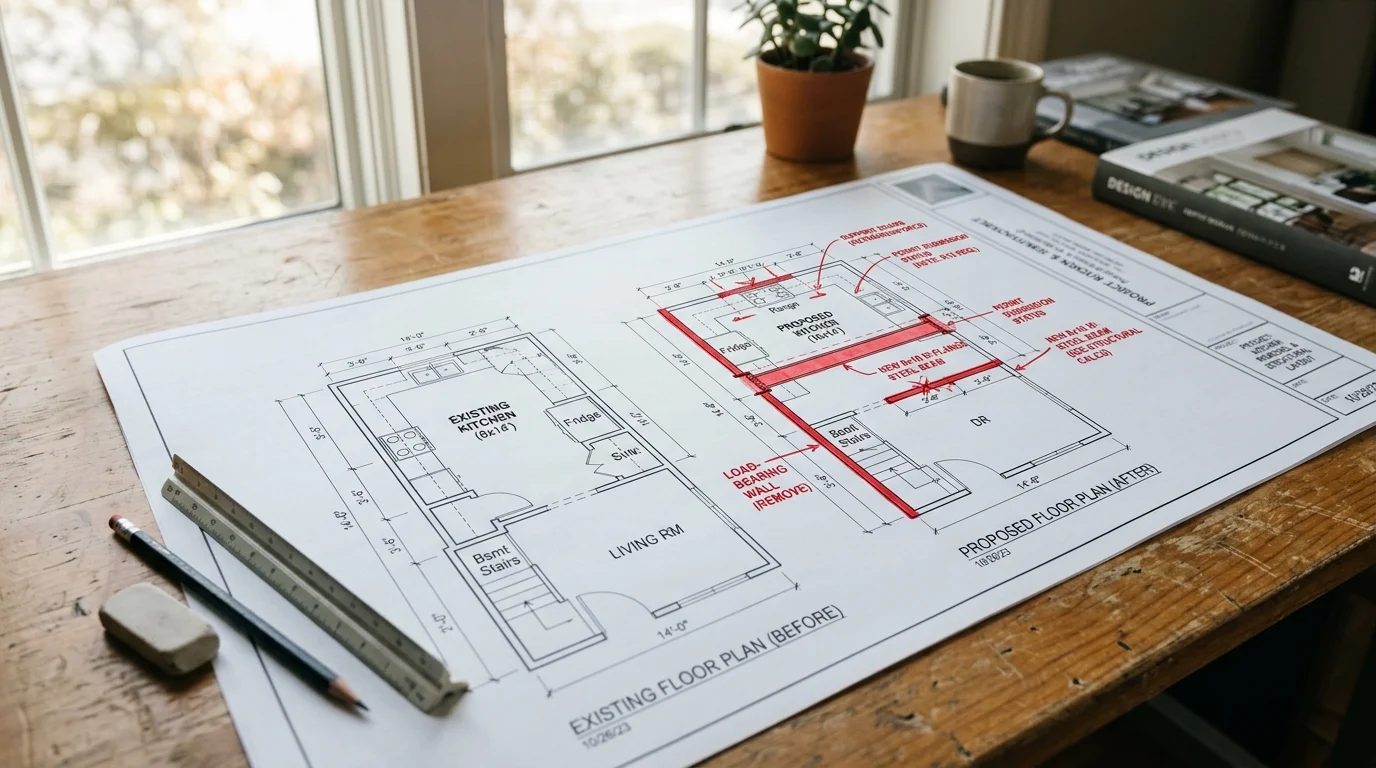
Removing or relocating walls—even partial walls—always requires a building permit. This includes opening up the kitchen to an adjacent room, removing a soffit, or reconfiguring the layout to create an island. These changes affect the home's structural integrity and must be reviewed by a structural engineer. Similarly, if you're expanding the kitchen into adjacent space or altering ceiling heights, a permit is mandatory.
Electrical Work
Adding new circuits, upgrading service panels, relocating outlets, or installing new lighting fixtures all require an electrical permit. This applies whether you're adding under-cabinet lighting, installing a new range hood, or powering a kitchen island with dedicated circuits. Electrical work is non-negotiable in Bellevue—inspectors verify code compliance to prevent fire hazards.
Plumbing and Water Systems
Moving the sink location, adding a second sink, relocating the dishwasher, or modifying drain lines requires a plumbing permit. Even replacing a faucet with a different model that needs new supply lines may trigger permit requirements. Water quality and drainage safety are strictly regulated.
Mechanical and Ventilation
Per the International Residential Code, Bellevue requires exhaust fans vented to the exterior with a minimum 100 cfm capacity. Installing a new range hood, upgrading to a larger exhaust system, or modifying ductwork requires a mechanical permit. Improper ventilation leads to moisture damage and mold, so inspections are thorough.
Appliance Relocation
According to the City of Bellevue, a permit is required to move an appliance if it involves installing or modifying gas lines, water lines, drains, vents, or electrical circuits. Replacing an appliance in the same location with a similar model typically doesn't need a permit, but relocating a range, refrigerator, or dishwasher does.
What Doesn't Require a Permit
Replacing cabinets or countertops without associated plumbing or electrical work generally doesn't require a building permit, though you may need separate trade permits if modifications accompany the installation. Understanding this distinction helps you prioritize your permit applications and budget accordingly.
Kitchen Work That Does NOT Require a Bellevue Permit
Not every kitchen upgrade demands a permit. Understanding which remodel work does not require permits in Seattle and Bellevue helps you move faster on cosmetic projects and focus your budget where it matters most.
Cabinet Replacement
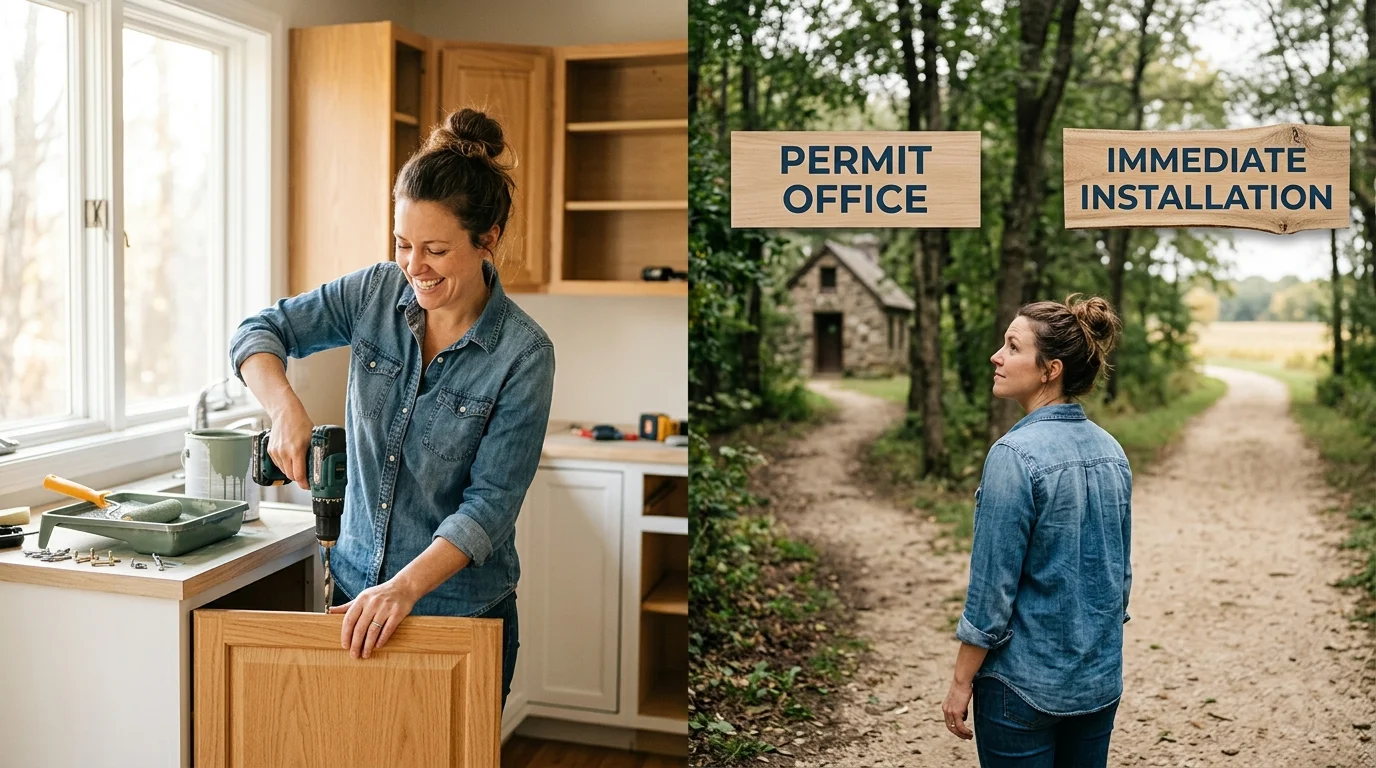
Swapping out existing cabinetry for new units—without modifying plumbing, electrical, or structural elements—is permit-free. This includes refacing cabinets or installing new door fronts. If your new layout keeps appliances and utilities in their current locations, you're clear to proceed.
Countertop Installation
Replacing countertops with laminate, granite, quartz, or butcher block requires no permit as long as you don't relocate the sink or alter plumbing connections. Surface-level upgrades fall outside permit jurisdiction.
Painting and Backsplash
Fresh paint, tile backsplashes, and decorative finishes are purely cosmetic and don't need permits. These projects enhance aesthetics without touching structural, electrical, or mechanical systems.
Flooring
Installing new tile, hardwood, or vinyl flooring over existing subfloors doesn't require a permit. However, if structural repairs to the subfloor are needed, that triggers permit requirements.
Appliance Replacement (Same Location)
Swapping an old refrigerator, dishwasher, or range for a new model in the same spot—without moving gas lines, water supply, or electrical circuits—is permit-free. Relocation, however, requires permits.
Hardware and Fixtures
Cabinet hardware, faucet upgrades, and light fixture replacements are cosmetic changes that bypass permit requirements entirely.
The Bellevue Kitchen Permit Application Process: Step-by-Step
Getting a kitchen remodel permit in Bellevue involves a straightforward online workflow, but understanding each stage helps you avoid delays and stay compliant. Here's what to expect:
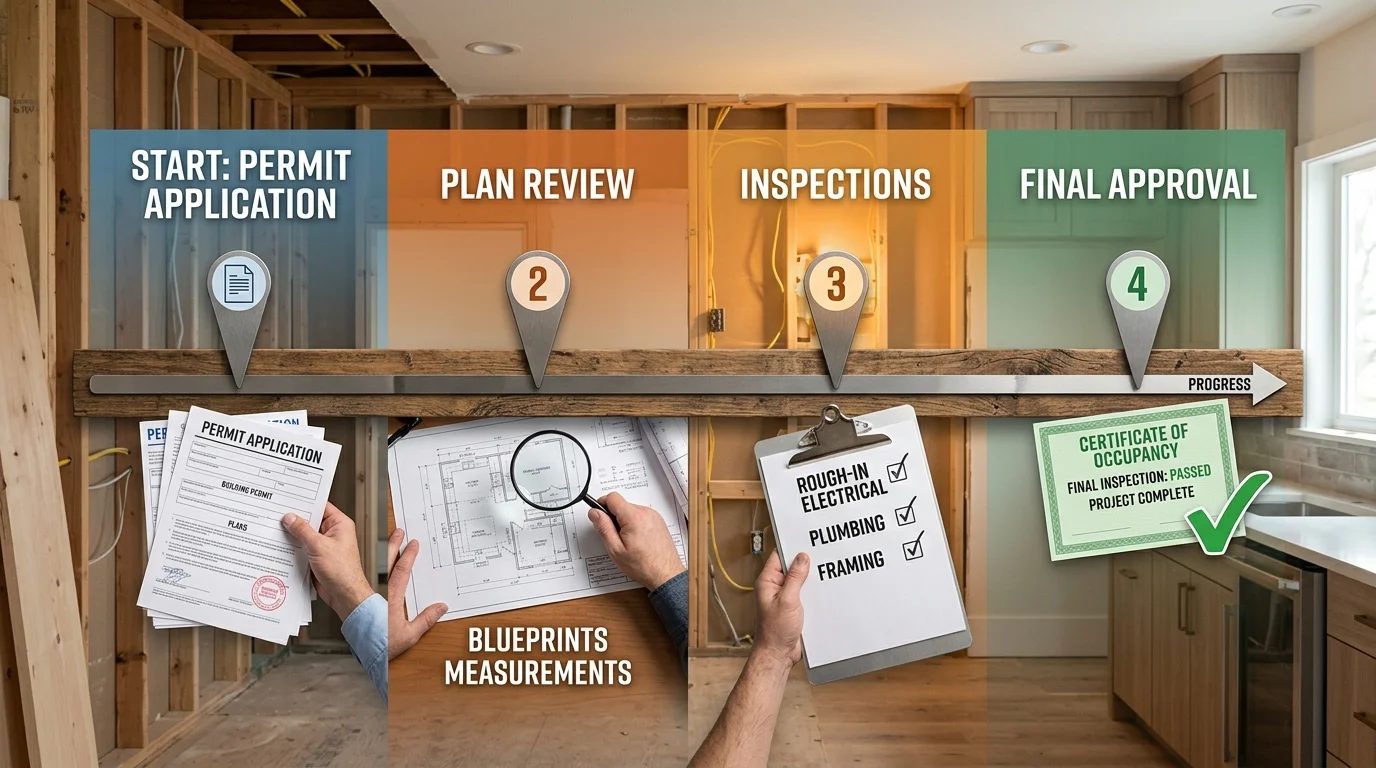
1. Determine Your Permit Type
Before applying, classify your project. Non-structural work—like cabinet replacement, appliance swaps, or electrical upgrades without layout changes—typically qualifies as a no-plan-review permit and can be issued the same day. Structural modifications, load-bearing wall removal, or major plumbing relocations require a standard permit with plan review, which takes 5–10 business days. This distinction affects your timeline significantly.
2. Gather Required Documentation
Collect your project details: property address, scope of work description, contractor information, and any architectural or electrical plans if required. According to the City of Bellevue's permit process overview, contractors must hold both a Washington State contractor license and a Bellevue business license before permit issuance. Verify your contractor has both before proceeding.
3. Submit Through MyBuildingPermit.com
All Bellevue permit applications are submitted 100% online through MyBuildingPermit.com, the regional portal serving Bellevue, Kirkland, Redmond, and surrounding Eastside cities. Create an account, upload your documentation, and pay the application fee (typically $200–$500 depending on project scope). The portal provides instant confirmation.
4. Wait for Plan Review (If Applicable)
For standard permits, the city reviews your plans for code compliance. You may receive requests for revisions—respond promptly to avoid extended delays. No-plan-review permits skip this step entirely.
5. Schedule Inspections
Once your permit is approved, the city assigns inspection dates. Typical kitchen remodels require framing, electrical, plumbing, and final inspections. Your contractor coordinates these with the city. Plan for 1–2 weeks between each inspection milestone.
6. Receive Final Approval
After all inspections pass, you'll receive a Certificate of Occupancy or final sign-off. Your kitchen is now officially compliant and ready to use. Understanding this timeline helps you plan your overall kitchen remodel schedule more accurately.
Bellevue Kitchen Permit Timelines and Costs
Permit timelines in Bellevue vary dramatically based on project scope and application completeness. Simple permits with no plan review—typically for projects under $5,000—issue same-day through MyBuildingPermit.com. Full plan-review permits, required for structural, electrical, or plumbing work, take 2–8+ weeks depending on complexity and inspector availability. Delays often stem from incomplete submissions or revisions requested during the review phase, so thorough documentation upfront saves weeks of back-and-forth.
Permit fees follow a valuation-based system tied to the fair market value of your work. A $30,000 kitchen remodel carries higher fees than a $15,000 cabinet and countertop upgrade. Expect permit fees to range from $200–$800 for most residential kitchen projects, with plan review adding another $100–$300. Additional costs include inspections (typically bundled into permit fees) and expedited processing if you need faster turnaround—usually a 50–100% premium on the base fee.
Bellevue remodeling costs run 20–30% above national averages due to high Eastside labor rates, mandatory Washington Energy Code compliance, and climate-specific construction requirements. Budget these permit and planning expenses as part of your overall project cost, not as surprises mid-construction.
| Project Scope | Permit Fee Range | Timeline (No Delays) | Plan Review Required? |
|---|---|---|---|
| Cosmetic only (paint, hardware) | $0–$100 | Same-day | No |
| Cabinets + countertops | $200–$400 | 3–5 days | No |
| Electrical + plumbing work | $400–$800 | 2–4 weeks | Yes |
| Full structural remodel | $600–$1,200 | 4–8 weeks | Yes |
Understanding these timelines and costs helps you plan your overall kitchen remodel schedule with realistic expectations and avoid budget overruns.
Common Permit Mistakes That Delay Bellevue Kitchen Remodels
Incomplete or Inaccurate Applications
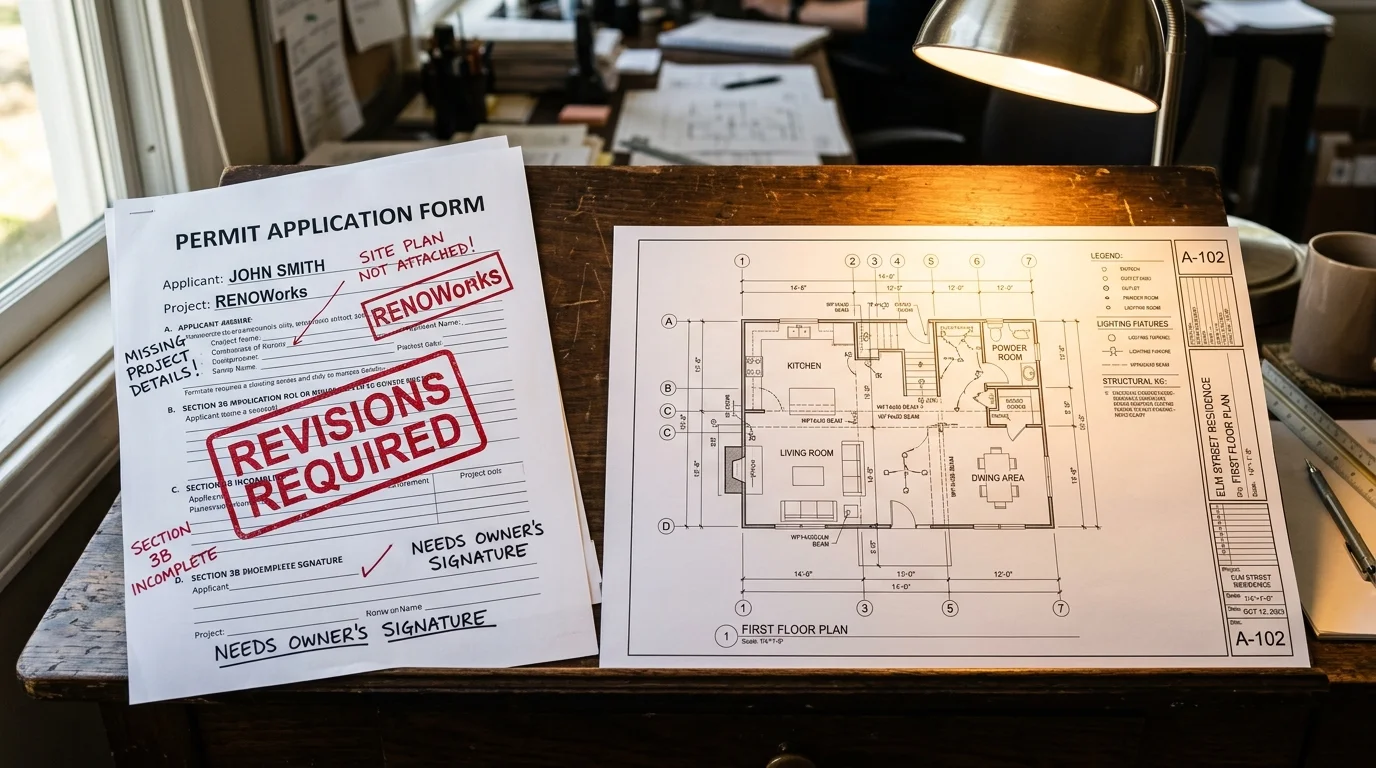
The most frequent culprit behind permit delays is submitting incomplete and accurate paperwork. Missing signatures, blank fields, or vague project descriptions force code officials to request resubmissions—adding 1–2 weeks to your timeline. Before hitting submit, cross-check every required field against Bellevue's official checklist. Have a second set of eyes review your application; a small oversight now prevents a costly stop-work order later.
Undervaluing Your Project Scope
Homeowners sometimes underestimate project costs to lower permit fees, but inspectors catch this immediately during plan review. Misrepresenting scope can trigger re-permitting, doubled fees, or work stoppages. Always declare the true scope—structural changes, electrical upgrades, plumbing relocations—upfront.
Poor-Quality or Missing Plans
Vague sketches won't pass plan review. Code officials need dimensioned drawings, electrical layouts, and structural details to approve your project. Investing in professional architectural plans ($500–$1,500) prevents rejection cycles and accelerates approval.
Hiring Unlicensed Contractors
Work performed by unlicensed professionals often fails inspection, requiring teardown and rework. Per Andrew Mikhael Architect, if code officials post a stop work order for unpermitted work, they can impose double fee penalties and require unpermitted work to be torn down. Always verify contractor licensing through Washington State's Department of Labor & Industries before signing contracts.
Skipping the Pre-Permit Consultation
Many homeowners discover mid-project that their design violates setback codes or energy requirements. A quick pre-submission conversation with Bellevue's planning department clarifies expectations and prevents costly redesigns.
Getting Your Bellevue Kitchen Permit Right the First Time
Navigating Bellevue's permit requirements doesn't have to derail your kitchen vision. The core principle is simple: declare your project scope upfront, submit complete plans, and work with licensed professionals. When you get these fundamentals right, permit costs and timelines become predictable obstacles rather than project killers. Most homeowners find that investing $500–$1,500 in professional architectural drawings and a few weeks for approval prevents far costlier delays and code violations down the road.
The real advantage emerges when you partner with a professional who knows Bellevue's specific codes and planning department expectations. Licensed remodelers like PNW Standard Remodel navigate these requirements regularly, catching potential issues before they trigger rejections or stop-work orders. A pre-submission consultation with your contractor and the city clarifies expectations early, transforming what feels like bureaucratic friction into a streamlined pathway toward a code-compliant, beautiful kitchen that enhances your home's value and functionality for years to come.