(206) 707-5830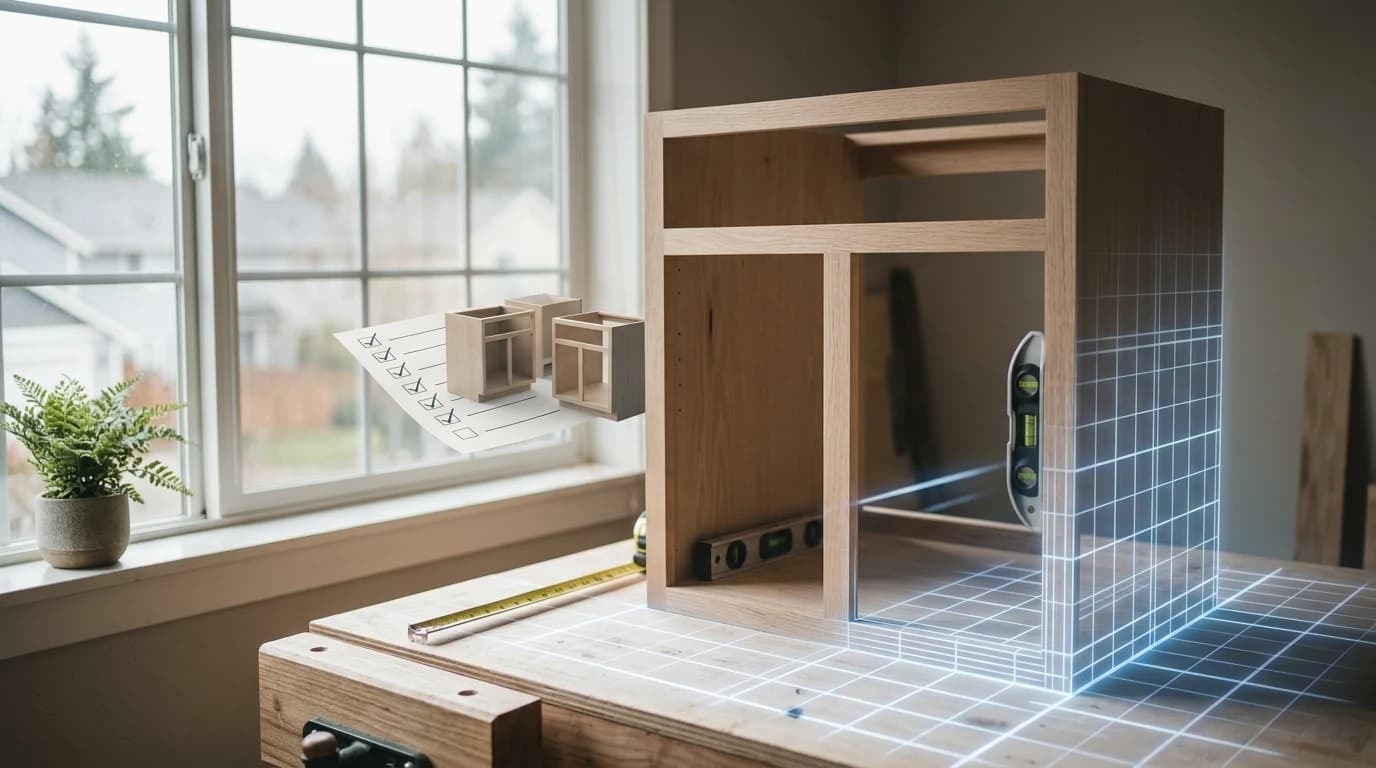

Frameless cabinets are cabinet boxes constructed without a face frame, offering a sleek, modern design with maximized interior storage and seamless door alignment. For homeowners planning a frameless cabinets Seattle kitchen remodel, this contemporary style is increasingly popular due to its efficient use of space and clean aesthetic that complements Pacific Northwest design trends. Unlike traditional framed cabinets, frameless designs eliminate the front frame, allowing for wider drawers and easier access—making them ideal for both compact urban kitchens and larger open-concept homes in Seattle.
Frameless vs. Framed Cabinets: Which Style Works for Your Seattle Home
The choice between frameless and framed cabinets shapes not just your kitchen's appearance, but how efficiently you use every inch of space. Understanding the structural and aesthetic differences helps you make a decision that aligns with both your design vision and practical needs—especially important in Seattle homes where space optimization and contemporary aesthetics often go hand in hand.
Storage Efficiency and Interior Space
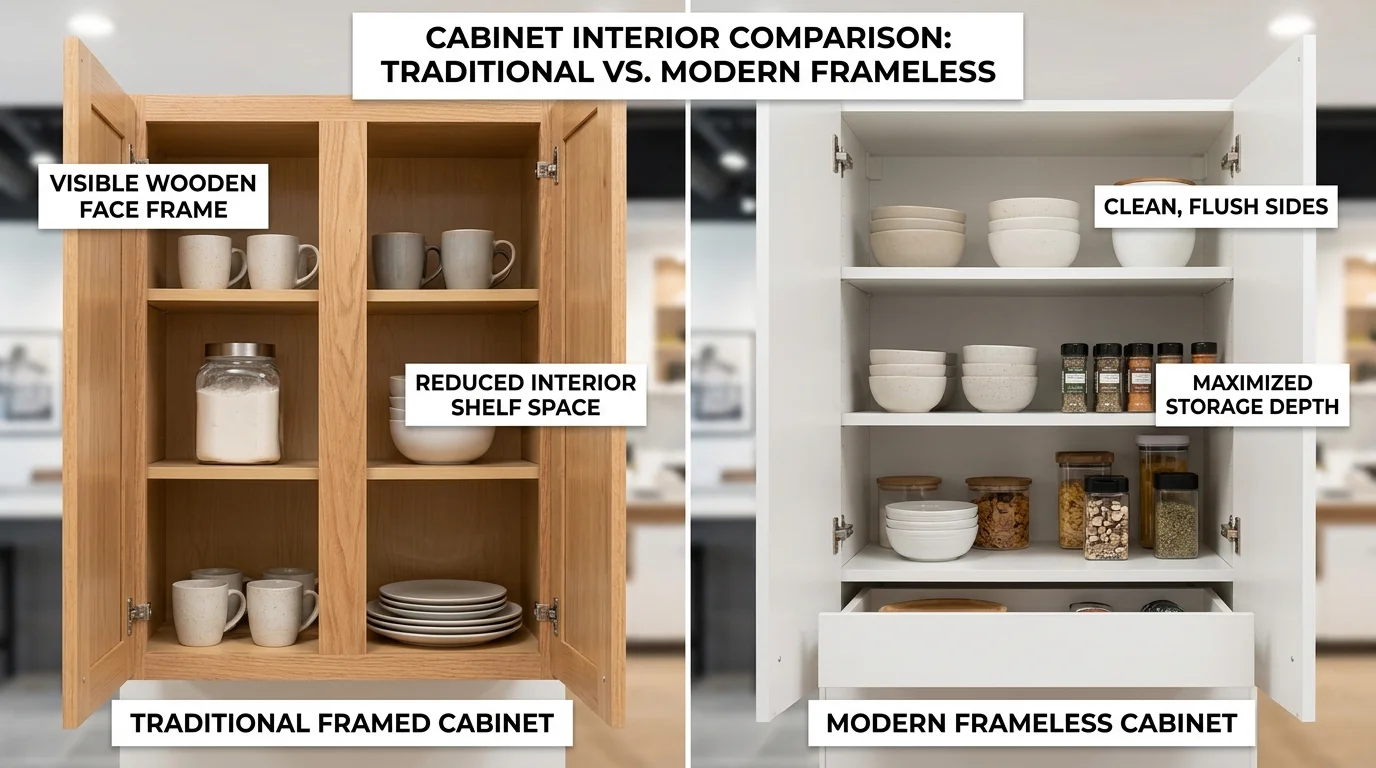
The fundamental difference lies in construction: framed cabinets have a wooden face frame attached to the front of the cabinet box, while frameless cabinets are built without this frame. This seemingly small detail creates a measurable advantage in usable storage. According to NextDay Cabinets, frameless cabinets provide approximately 10–15% more usable interior space compared to framed cabinets, as the absence of a face frame allows drawers to be built up to 1½ inches wider.
For Seattle homeowners working with compact kitchens—common in urban condos and older Craftsman homes—this extra space translates to real functionality. A frameless design lets you fit wider drawers for pots and pans, deeper shelves for pantry items, and easier access to corner storage without the obstruction of a frame. When you're evaluating cabinet replacement options, this efficiency gain often justifies the slightly higher upfront cost. Frameless construction also means hinges mount directly to the cabinet sides, creating a cleaner interior and reducing the dead space where items get lost.
Modern Design and Visual Appeal
Frameless cabinets deliver the sleek, minimalist aesthetic that dominates contemporary kitchen design across the Pacific Northwest. Without a visible face frame, the cabinet doors and drawer fronts sit flush against the cabinet box, creating a seamless, European-inspired look that feels intentional and refined. The clean lines work beautifully with handle-less designs, integrated lighting, and high-gloss or matte finishes that appeal to homeowners seeking a curated, gallery-like kitchen.
This style pairs naturally with the design preferences of Seattle residents who favor open shelving, natural wood tones, and understated elegance. Framed cabinets, by contrast, carry a more traditional or transitional feel—the visible frame creates visual separation between doors and drawers, which works well in classic or farmhouse styles but can feel dated in a modern remodel. When deciding between cabinet refacing versus replacing cabinets entirely, frameless construction offers superior design flexibility if you're moving toward a contemporary direction. The choice ultimately depends on your home's existing character and whether you're embracing modern minimalism or honoring a traditional aesthetic.
| Feature | Frameless Cabinets | Framed Cabinets |
|---|---|---|
| Interior Space | 10–15% more usable storage | Standard capacity |
| Design Style | Modern, European, minimalist | Traditional, transitional, classic |
| Drawer/Door Access | Wider openings, easier reach | Standard openings |
| Visual Appearance | Flush, seamless, clean lines | Visible frame, separated panels |
| Cost | Typically higher | More budget-friendly |
| Best For | Small kitchens, contemporary homes | Classic designs, larger budgets |
Frameless Cabinet Options: Custom, Semi-Custom, and RTA Solutions
When planning a frameless kitchen cabinet project in Seattle, you'll encounter three distinct sourcing paths, each with different trade-offs between customization, cost, timeline, and quality. Understanding these options helps you align cabinet selection with your budget, design vision, and project schedule.
Custom Frameless Cabinets: Maximum Flexibility
Fully custom frameless cabinetry offers unlimited design possibilities. You control every dimension, material, finish, hardware detail, and interior configuration. If your kitchen has unusual wall angles, ceiling heights, or architectural quirks—common in Seattle's older homes and urban condos—custom cabinets adapt seamlessly. Premium materials like white oak, walnut, or maple veneer become available, along with specialty finishes (matte lacquer, hand-stained, or natural oil) that semi-custom manufacturers don't typically offer.
The trade-off is cost and time. Custom frameless cabinets typically run $500–$1,200 per linear foot installed, and lead times stretch to 8–12 weeks from order to delivery. For a 10×12-foot kitchen, you're looking at $6,000–$14,400 in cabinet costs alone. Custom work demands detailed design consultation, precise measurements, and often multiple revision rounds—all valuable for complex remodels but unnecessary for straightforward layouts.
Semi-Custom Frameless Cabinets: Balance of Cost and Quality
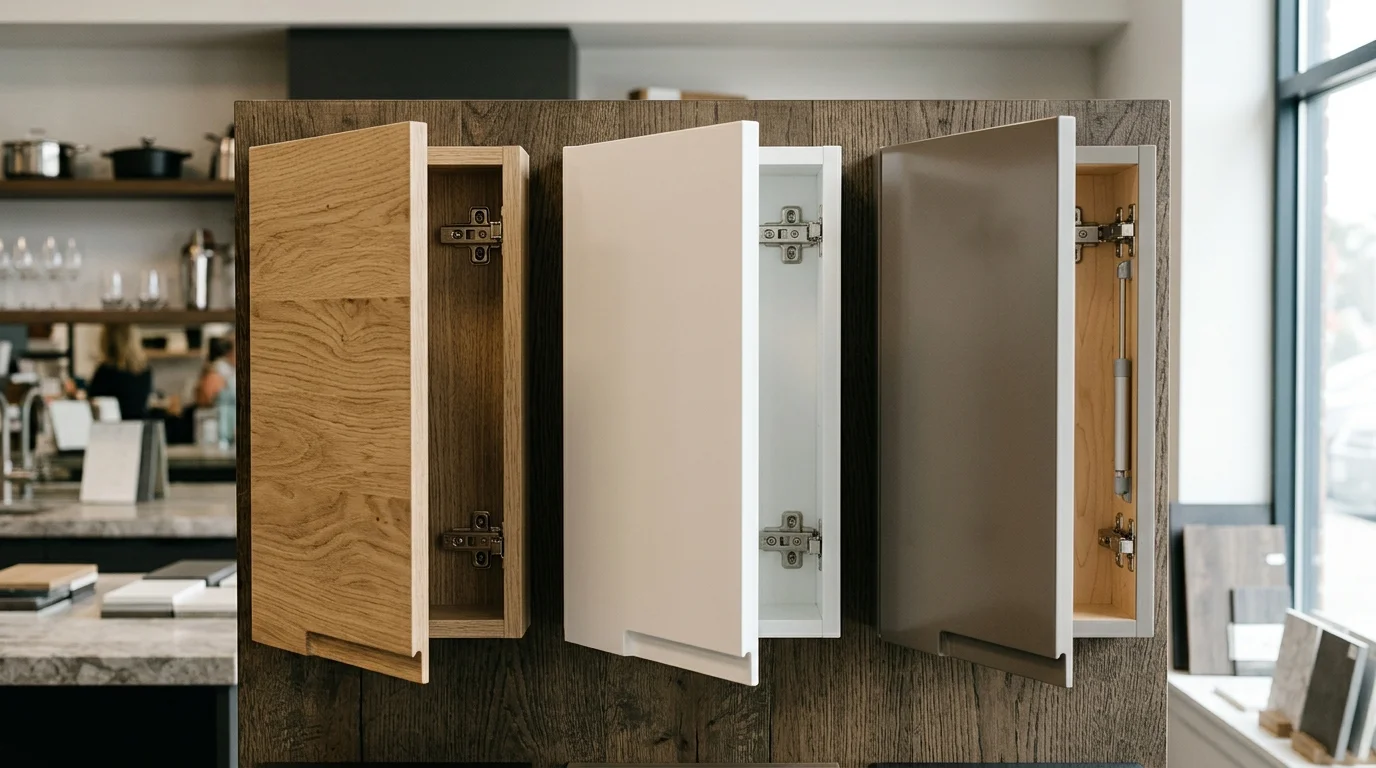
Semi-custom options split the difference. Brands like Bellmont cabinets offer modular frameless systems with preset widths, depths, and heights, but allow customization of finishes, hardware, interior accessories, and some dimensional tweaks. You get European-style construction quality and modern aesthetics without the full custom price tag.
Semi-custom frameless cabinets range from $150–$650 per linear foot and deliver in 4–8 weeks. For the same 10×12 kitchen, expect $1,800–$7,800. This tier works well for homeowners seeking modern design without custom pricing, and it's ideal when your kitchen layout fits standard cabinet dimensions. Bellmont cabinets for Seattle kitchen remodels offer solid construction and clean lines at mid-range pricing.
RTA Frameless Cabinets: Budget-Friendly Alternative
Ready-to-assemble (RTA) frameless cabinets are the most affordable entry point, costing $100–$300 per linear foot. A 10×12 kitchen might run $1,200–$3,600 total. RTA options arrive flat-packed and require assembly—either DIY or hired labor—which adds time and skill requirements. Quality varies widely; some RTA frameless cabinets rival semi-custom durability, while others feel flimsy.
RTA makes sense for budget-conscious DIY homeowners, rental properties, or temporary solutions. Stock availability means 1–3 week delivery. However, customization is minimal, and assembly mistakes can compromise door alignment and longevity. For most Seattle remodels, semi-custom frameless cabinets offer the best balance of modern design, reasonable cost, and reliable quality.
| Option | Cost (per linear foot) | Lead Time | Customization | Best For |
|---|---|---|---|---|
| Custom Frameless | $500–$1,200 | 8–12 weeks | Unlimited | Complex layouts, premium materials |
| Semi-Custom Frameless | $150–$650 | 4–8 weeks | Finishes, hardware, accessories | Modern design, standard dimensions |
| RTA Frameless | $100–$300 | 1–3 weeks | Minimal | Budget projects, DIY assembly |
Frameless Cabinet Costs in Seattle: Pricing and Budget Planning
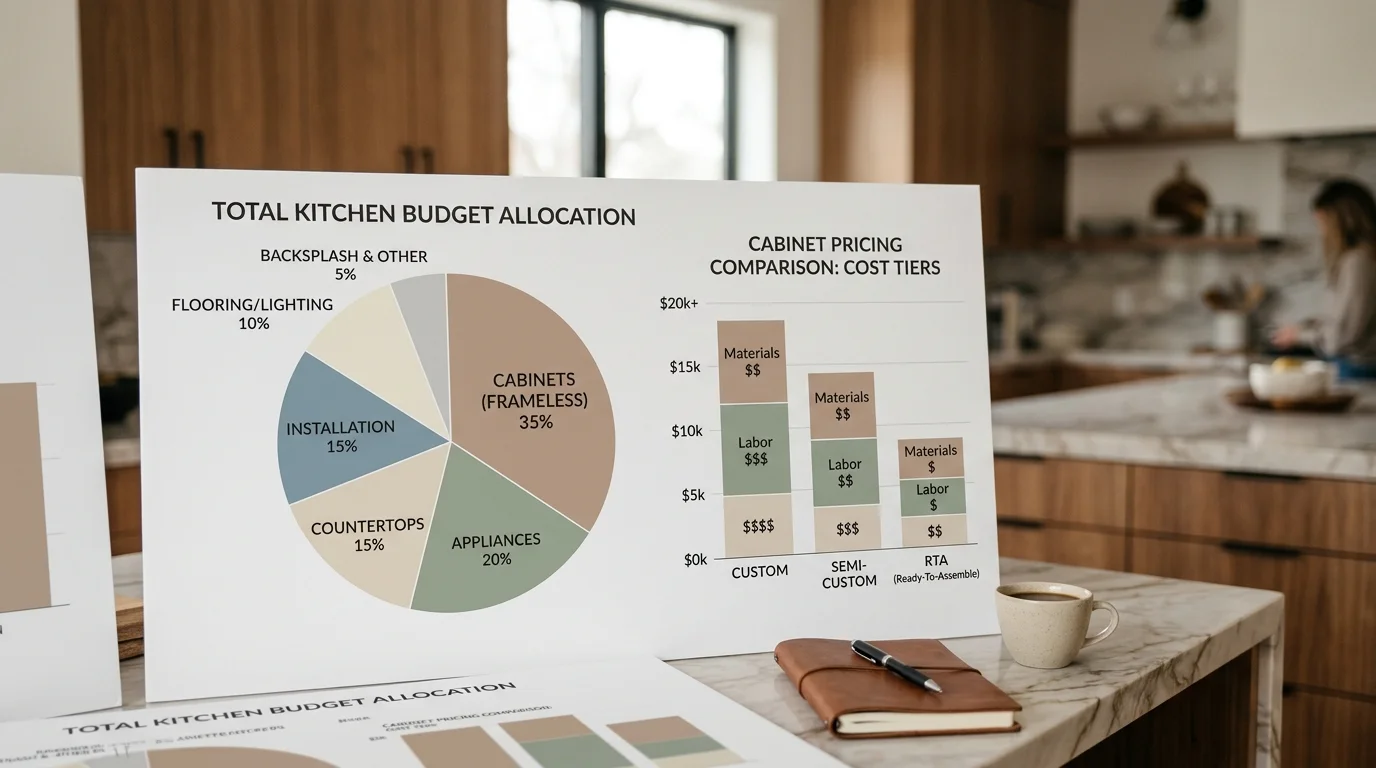
Frameless cabinet pricing in Seattle varies dramatically depending on whether you choose custom, semi-custom, or ready-to-assemble options—and understanding these tiers is essential for realistic budget planning. The material you select, hardware quality, and installation complexity all drive the final cost, which can range from under $5,000 for a modest RTA kitchen to $30,000+ for a fully customized installation with premium finishes.
According to Seattle Cabinets' cost guide, mid-range custom cabinet projects typically fall between $8,000 and $18,000, while fully customized kitchen installations often land in the $13,000 to $30,000 range. For homeowners considering cabinet replacement cost in Seattle, semi-custom frameless cabinets offer the sweet spot: they deliver modern aesthetics and reasonable customization without the premium price tag of full custom work.
Material and Hardware Cost Factors
Wood species dramatically affect frameless cabinet pricing. White oak material costs range from $400–$600 per linear foot for custom cabinetry, while MDF and maple or birch cost $300–$400 per linear foot. Premium finishes—lacquer, stain, or specialty paints—add $50–$150 per linear foot compared to basic laminate. Soft-close hinges and drawer slides cost $40–$80 per opening versus $10–$20 for standard mechanisms. Over a 10×12 kitchen with 15 cabinet openings, upgrading hardware alone can add $450–$900 to your project.
| Material | Cost per Linear Foot | Durability | Best For |
|---|---|---|---|
| White Oak | $400–$600 | Excellent | Premium, traditional aesthetics |
| Maple/Birch | $300–$400 | Very Good | Mid-range, versatile finishes |
| MDF with Veneer | $300–$400 | Good | Budget-conscious, modern looks |
| Plywood | $200–$300 | Good | Economy builds, hidden areas |
Installation Labor and Timeline
Installation labor in Seattle adds $2,500–$5,500 for a typical kitchen, separate from material cost, with installation complexity affecting pricing. Condo projects often run higher due to elevator coordination and space constraints. If you're exploring cabinet refacing cost in Bellevue as an alternative, refacing runs $1,811–$2,268 for 12 cabinets using laminate, or $2,000–$6,000 for wood veneer—representing 30–50% savings compared to full replacement. However, refacing only refreshes the exterior; if your cabinet boxes are damaged or undersized, replacement becomes necessary.
Installation timelines typically span 3–5 days for a standard kitchen, though complex layouts with island work or plumbing relocation can extend to 7–10 days. Factor in 2–4 weeks for delivery after ordering semi-custom units, plus 1–2 weeks for permit approval if your remodel requires structural changes. Total project duration from design to final inspection usually runs 8–16 weeks for a full kitchen remodel.
Design Finishes and Materials: White Oak, Painted, and Specialty Options
Natural Wood Finishes and White Oak Trends
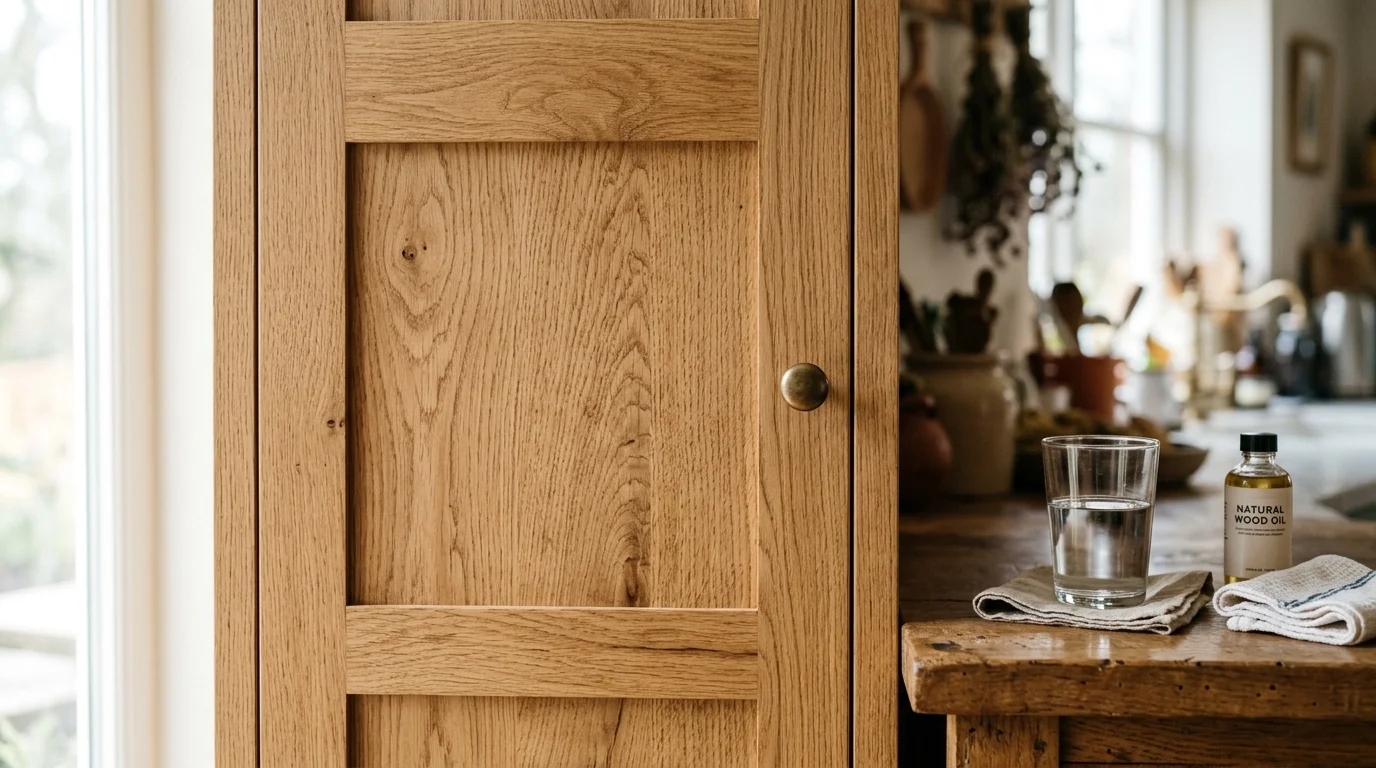
White oak has emerged as the dominant choice for frameless kitchen cabinets in the Pacific Northwest, and the trend shows no signs of slowing. According to DL Cabinetry's 2026 design forecast, 51% of kitchen designers and industry professionals identify white oak as their preferred cabinet material, citing its timeless beauty, distinctive grain pattern, and exceptional durability. In Seattle's modern homes, natural wood finishes complement both minimalist Scandinavian aesthetics and warm contemporary designs.
White oak cabinets demand respect for maintenance. The wood's open grain structure means it absorbs oils and moisture more readily than harder woods like maple. Regular sealing—typically every 2–3 years—protects against water damage and staining, especially around sinks and dishwashers. Cost runs $600–$900 per linear foot for custom white oak frameless cabinets, making it a premium choice. Stained finishes (medium to dark tones) hide fingerprints and dust better than natural or light finishes, reducing maintenance frequency. If budget is tight, engineered wood with white oak veneer ($400–$600 per linear foot) delivers the aesthetic at lower cost, though it's less repairable if the veneer chips.
Painted and Modern Finishes
Painted frameless cabinets offer flexibility that natural wood cannot match. Contemporary palettes—soft whites, warm grays, charcoal, and matte black—work seamlessly with stainless steel appliances, quartz countertops, and minimalist hardware. Painted finishes cost $300–$500 per linear foot for semi-custom units, undercutting natural wood significantly.
The cabinet painting versus refinishing decision hinges on your existing cabinet condition. If your current cabinets have solid frames and functional boxes, professional refinishing—sanding, priming, and applying two coats of cabinet-grade paint—costs $1,500–$3,500 for a typical kitchen and takes 5–7 days. This approach works best for kitchens with good bones but dated finishes. However, if your cabinets are damaged, undersized, or lack the clean lines frameless design demands, full replacement becomes the smarter investment. Modern laminates and thermofoil finishes ($250–$400 per linear foot) resist scratching and moisture better than paint, making them ideal for high-traffic kitchens or homes with young children. These materials require minimal maintenance—a damp cloth handles most spills—and hold color consistency across large surfaces without visible brush marks.
Frameless Cabinet Installation and Remodel Timeline in Seattle
Frameless cabinet installation follows a structured sequence that differs meaningfully from traditional framed cabinet work. The process begins weeks before your contractor touches a single cabinet—with precise measurements, design finalization, and permit coordination. Unlike simpler projects, frameless systems demand exact tolerances because there's no face frame to hide installation imperfections or absorb minor measurement errors.
Pre-Installation Phase (2–4 weeks)
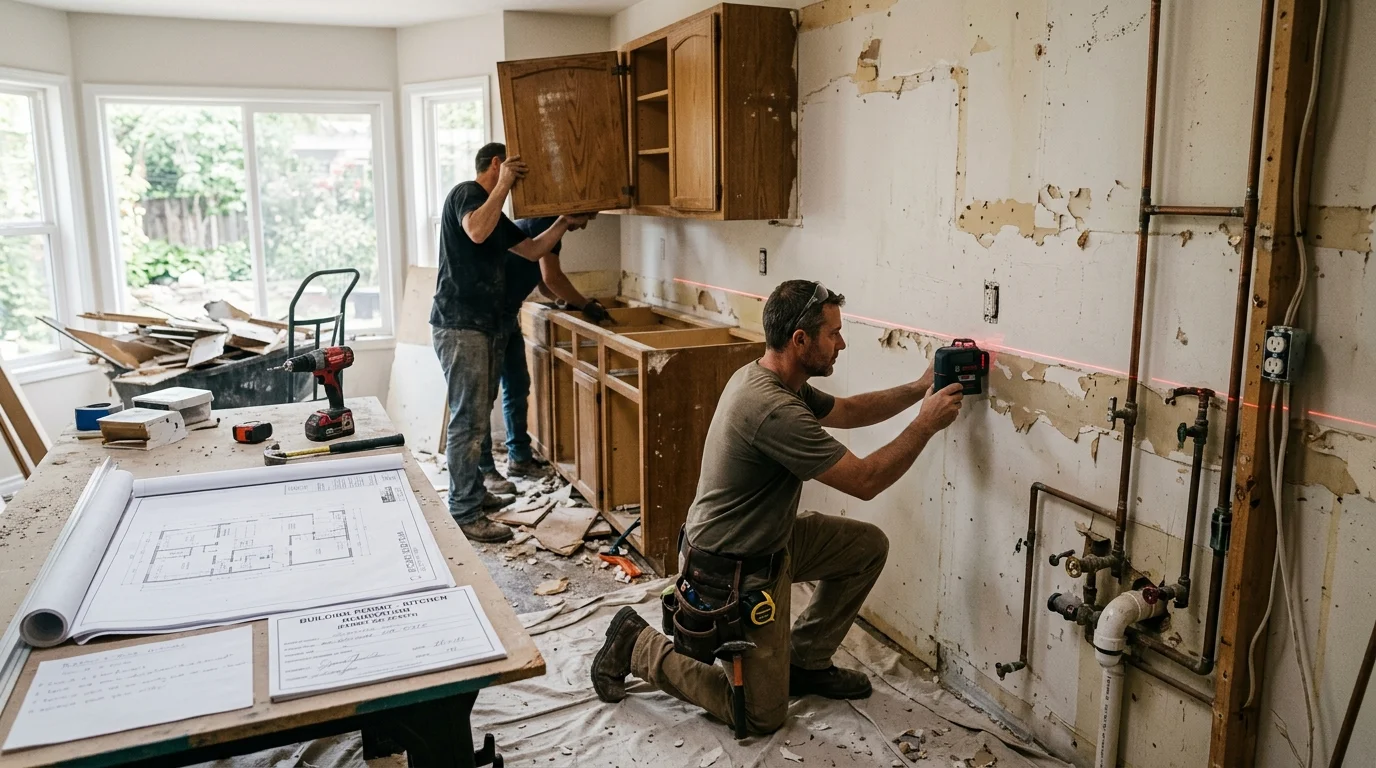
Before cabinets arrive at your Seattle home, your contractor completes detailed site measurements and submits final designs for approval. This phase includes securing any necessary permits through Seattle's Department of Construction and Inspections, removing existing cabinetry, and preparing the kitchen space—leveling walls, addressing plumbing or electrical conflicts, and ensuring adequate clearance for delivery. Frameless cabinets are typically ordered 4–6 weeks in advance, whether custom or semi-custom, so timeline planning must account for manufacturing lead times.
Installation Phase (3–5 days)
The actual installation process is faster than you might expect. Experienced crews install wall cabinets first, using laser levels to ensure perfect alignment—critical for frameless designs where gaps are immediately visible. Base cabinets follow, with careful attention to floor levelness and spacing. RTA (ready-to-assemble) frameless units require assembly on-site; experienced installers complete this in 10–20 minutes per cabinet, though first-time assembly runs 30–45 minutes per unit. A typical 10×10 kitchen requires 8–16 hours of assembly time total.
Post-Installation Finishing (2–3 days)
After cabinets are secured and level, your crew installs hardware, adjusts door and drawer alignment, and completes countertop integration. Final inspections ensure all doors close smoothly and shelving sits perfectly level.
Total Timeline: 8–12 weeks from order to completion, compared to cabinet refacing timelines in Seattle that typically complete in 3–5 days of installation work. While refacing offers faster turnaround, frameless replacement provides superior durability, modern aesthetics, and optimized storage that refacing cannot match—making the extended timeline a worthwhile investment for most Seattle homeowners undertaking a full kitchen transformation.
Making the Right Cabinet Choice for Your Seattle Kitchen Remodel
Choosing frameless cabinets for your Seattle kitchen remodel is ultimately about balancing three interconnected priorities: the aesthetic vision you want to achieve, the storage efficiency your household needs, and the budget and timeline that work for your life. Frameless design delivers on all three fronts, but the path to getting there depends on understanding your options and what matters most to your home.
If maximizing usable storage in a compact space is your primary concern—common in Seattle's urban kitchens and condos—frameless cabinets outperform traditional framed designs by eliminating the interior frame that eats into shelf depth. The streamlined appearance also works across multiple design languages, from minimalist Scandinavian aesthetics to warm contemporary styles with natural wood finishes. Cost-wise, you're looking at a spectrum: semi-custom frameless options offer the best value for most homeowners, while custom solutions provide unlimited design flexibility at a premium, and RTA (ready-to-assemble) units work for budget-conscious projects willing to invest installation time.
Timeline matters too. Plan for 8–12 weeks total when replacing cabinets, compared to the faster turnaround of cabinet refacing, which completes installation in just 3–5 days. That extended timeline reflects the quality and durability you're gaining—frameless replacement is a genuine kitchen transformation, not a cosmetic refresh.
The best way forward is to connect with professionals who understand Seattle's specific needs: older homes with uneven floors, moisture concerns in our climate, and the design preferences of Pacific Northwest homeowners. PNW Standard Remodel serves Seattle and the Eastside with free estimates and expert guidance on frameless cabinet options tailored to your home. Contact us today to explore which frameless solution aligns with your vision and budget.