(206) 707-5830

Renovating a condo in Seattle means navigating more than just design choices and construction timelines. One critical factor that catches many homeowners off guard is elevator access—specifically, how to move materials, fixtures, and equipment into your unit without violating building codes, HOA agreements, or building management policies. Delivery elevator rules for condo remodels in Seattle are strict, and breaking them can result in fines, project delays, or damage charges that quickly inflate your budget. Understanding these rules upfront protects your investment and keeps your renovation on track.
Quick Answer:
Seattle condo remodels require elevator access governed by three layers of rules: building codes set by the city, HOA bylaws specific to your building, and building management policies. Most buildings restrict elevator use to designated hours, require protective padding, mandate insurance coverage, and may charge fees ranging from $500 to $2,000 per day. You must obtain written approval from both your HOA and building management before moving any materials—this approval is non-negotiable and often takes 2-4 weeks to secure.
Elevator access isn't just a logistical convenience; it's a regulated necessity in Seattle's dense urban landscape where most condos lack ground-level loading docks. The rules exist to protect shared infrastructure, prevent damage to other residents' property, and ensure fair access to common areas. When you're planning a kitchen or bathroom renovation in your Seattle condo, securing proper elevator permits and understanding the restrictions becomes as important as pulling your remodel permits. This guide walks you through the key rules, who enforces them, what documentation you'll need, and how to avoid costly mistakes that delay your project.
Table of Contents
- Seattle Building Code Requirements for Elevator Use During Renovations
- Weight and Dimension Limits for Delivery Elevators
- Protection and Damage Prevention Standards
- HOA Approval and Condo Building Policies for Elevator Access
- Scheduling and Reservation Requirements
- Insurance and Liability Documentation
- Practical Planning for Kitchen and Bathroom Remodels in Seattle Condos
- Coordinating Material Deliveries and Elevator Scheduling
- Budget Considerations and Hidden Costs
- Ventilation and Permit Considerations for Seattle Condo Kitchen Remodels
- Working with Contractors Who Understand Seattle Condo Elevator Rules
- Navigating Elevator Access: Key Takeaways for Your Seattle Condo Renovation
Seattle Building Code Requirements for Elevator Use During Renovations
Seattle's Department of Construction and Inspections (SDCI) enforces elevator access rules through the International Building Code (IBC) as adopted by Washington State, with local amendments that reflect the city's dense urban environment. These standards exist to protect shared infrastructure and ensure safe material movement in residential buildings where elevators serve multiple units. When planning a condo kitchen or bathroom remodel, understanding the code framework governing elevator use is as critical as securing your construction permits—violations can halt your project, trigger fines, or expose you to liability claims from your building.
The IBC establishes baseline requirements for elevator capacity, protection, and operational safety. Washington State has adopted these standards with specific amendments, and Seattle adds its own local interpretations through SDCI guidelines. Additionally, Washington State Senate Bill 5156, effective June 11, 2026, will direct the State Building Code Council to adopt standards for the 2027 code allowing minimally sized passenger elevators in certain apartment buildings, which may eventually affect how older Seattle condos manage renovation traffic. For now, most residential buildings operate under current code, which means your elevator specifications are locked into your building's original design and certification.
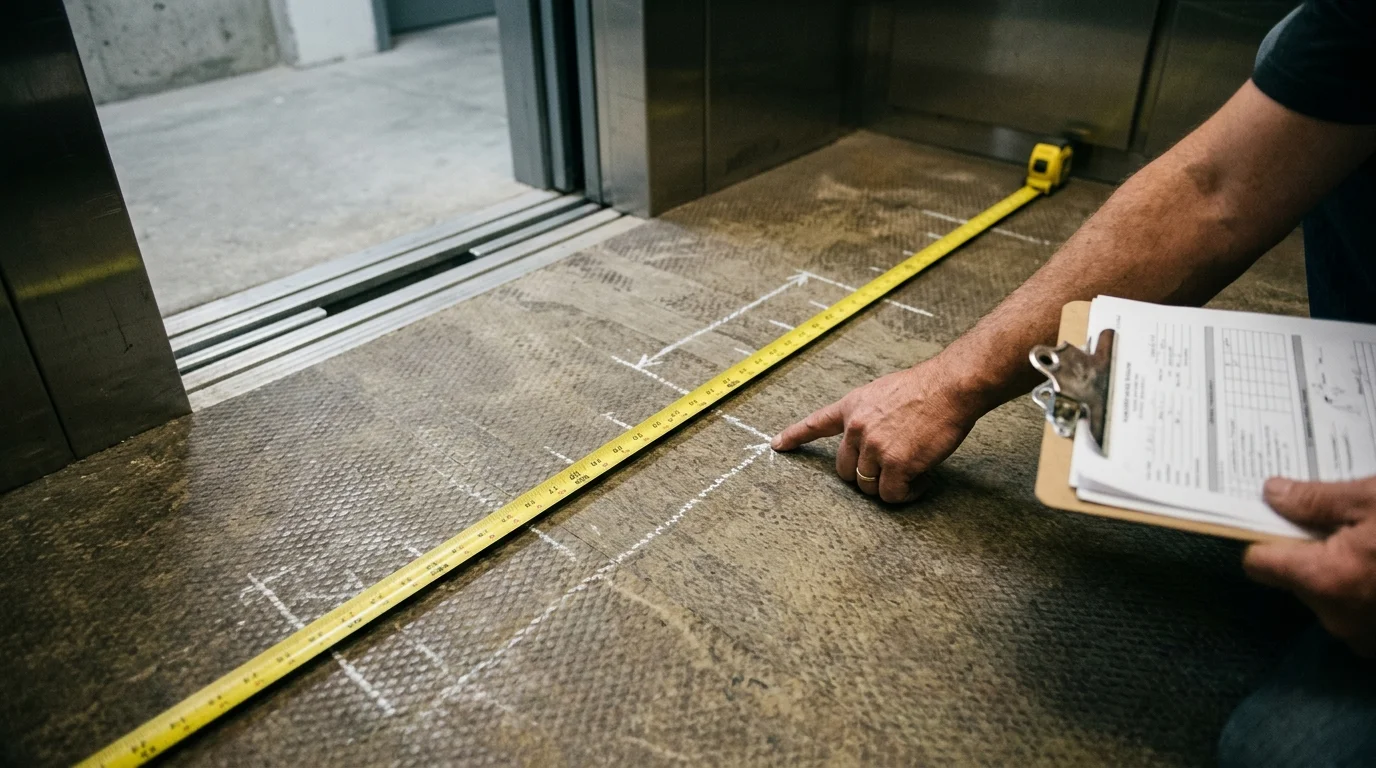
Before moving any materials, your contractor must verify the elevator's exact weight capacity and interior dimensions with building management. This step is non-negotiable and often overlooked—it's the difference between a smooth delivery day and discovering mid-project that your granite countertop or new appliance won't fit.
Weight and Dimension Limits for Delivery Elevators
Residential passenger elevators typically have weight capacities ranging from 2,500 to 4,000 lbs, though some older Seattle buildings may operate at lower thresholds. Interior dimensions vary widely; a standard residential elevator car measures roughly 36 inches wide by 48 inches deep, but this can be tighter in older condos. Before scheduling material deliveries for your remodel, your contractor must obtain written specifications from building management confirming both the weight limit and the interior dimensions of the car.
Common renovation materials frequently exceed these limits. A granite or quartz countertop slab can weigh 300–500 lbs; a cast-iron soaking tub runs 400–600 lbs; large appliances like refrigerators or ranges typically weigh 200–400 lbs each. When these items are bundled with installation materials, packaging, and equipment, you can easily hit or exceed the elevator's capacity. If your materials exceed limits, building management may require you to use an external crane or freight elevator (if available), which adds significant cost and scheduling complexity.
Protection and Damage Prevention Standards
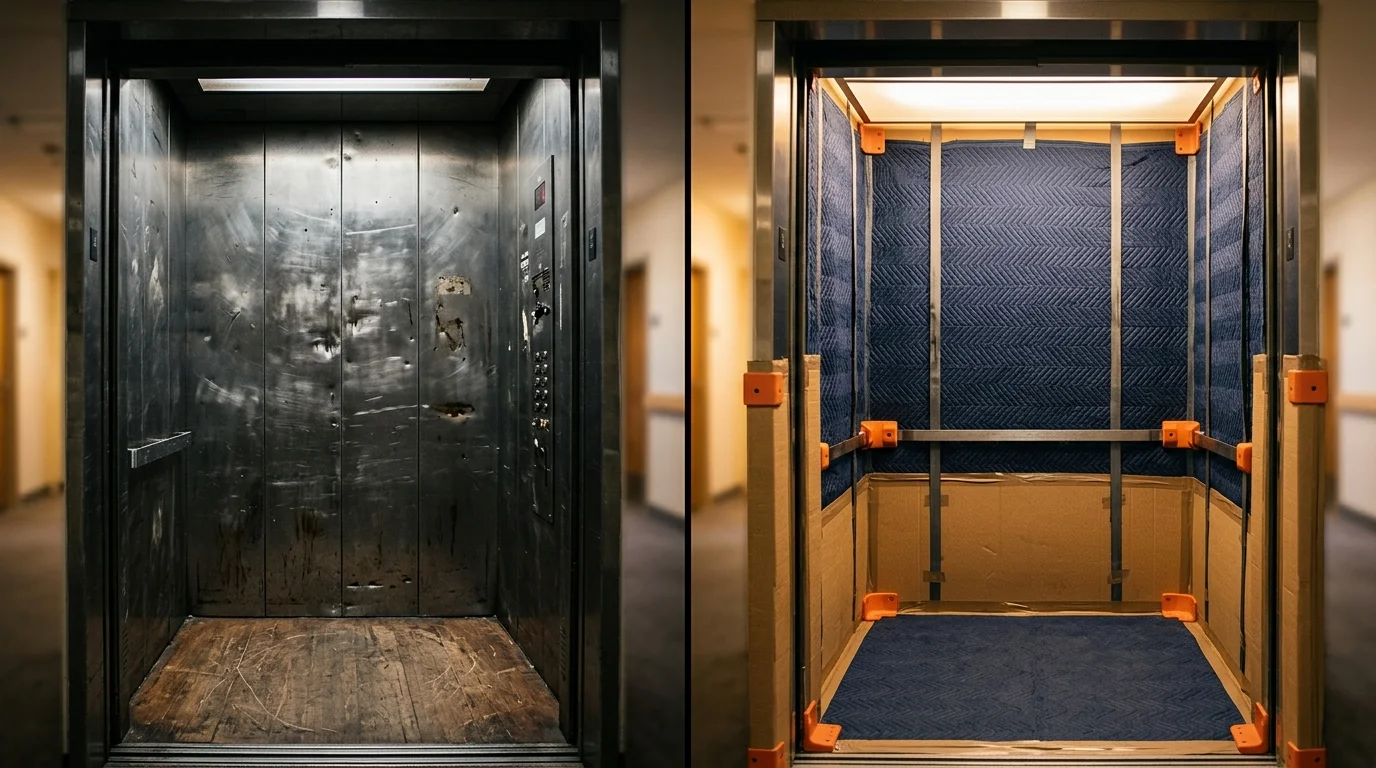
SDCI requires contractors to protect elevator interiors during material movement using padding, protective films, plywood guards, and corner protectors. Building management typically specifies the exact protection method required—some buildings mandate professional moving blankets and cardboard; others require full plywood enclosure of walls and doors. Any damage to the elevator during your remodel becomes your financial responsibility, and most buildings require contractors to carry elevator damage insurance or post a damage bond before work begins.
This protection requirement isn't optional or negotiable. Building management enforces it strictly because elevator repairs are expensive and shared costs affect all residents. Damage claims can range from $500 for minor scuffs to $5,000+ for structural damage or mechanical issues. Your contractor's insurance should cover this exposure, but verify coverage limits before signing any elevator use agreement with your HOA or building management.
HOA Approval and Condo Building Policies for Elevator Access
Beyond Seattle's building code requirements, your condo's HOA and building management establish their own elevator use policies—and these are often more restrictive than city regulations. Every building operates differently. Some allow unrestricted freight elevator access during business hours; others permit moves only on weekends or require advance scheduling weeks in advance. Understanding your specific building's rules before you commit to a contractor is essential, because violating elevator policies can result in work stoppages, fines, or even eviction from the building's common areas.
The first step is requesting your building's official elevator use policy and move-in/move-out guidelines from your HOA or building management office. These documents outline scheduling procedures, reservation fees, time-of-day restrictions, insurance requirements, and damage liability. If your building has both a service elevator (typically smaller, reserved for maintenance and deliveries) and residential elevators, management will specify which one you can use for your remodel. Service elevators, when available, are preferable because they're designed for heavy material movement and their use doesn't inconvenience residents. Residential elevators, by contrast, are shared with all occupants, so building management strictly limits their availability during remodels.
Scheduling and Reservation Requirements
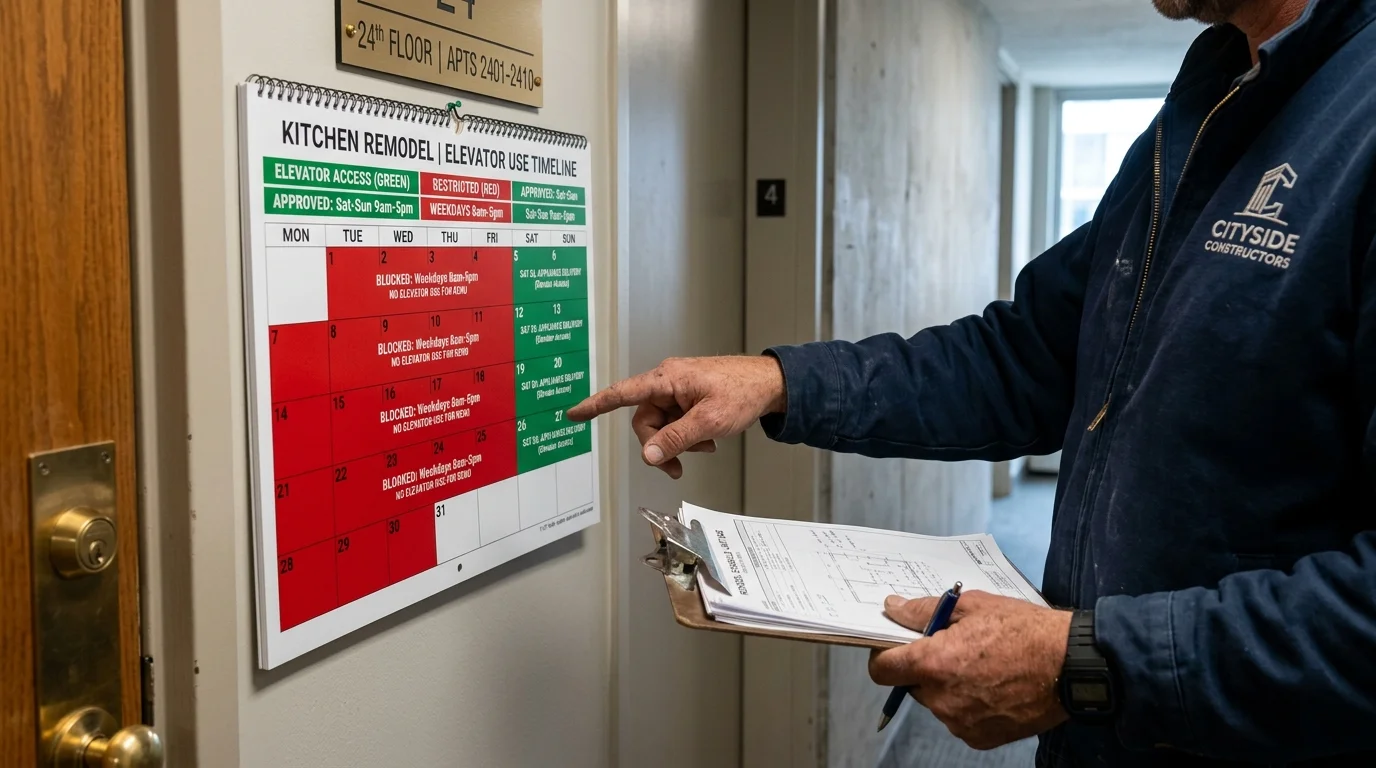
Most Seattle condo buildings require elevator reservation requests submitted 2–4 weeks in advance. You'll complete a formal reservation form requesting your project scope, estimated timeline, contractor details, and the specific dates and times you need elevator access. Building management uses this information to coordinate with other residents and schedule maintenance around your work. Some buildings charge reservation fees ranging from $100 to $300 per day for freight elevator access, so factor this into your project budget. Your contractor should handle the reservation request, but verify they've submitted it before materials arrive—missing this step can delay your entire project.
Once approved, your reservation comes with specific conditions. Common restrictions include "no elevator use between 8 a.m. and 5 p.m. on weekdays" (to minimize disruption to working residents), "weekends and evenings only," or "reserved access 7 a.m.–9 a.m. on Tuesdays and Thursdays." Some buildings prohibit elevator use on holidays or during peak move-in periods. Your contractor must comply strictly with these windows. If they exceed the approved time slots or use the elevator outside scheduled hours, building management can revoke access immediately, forcing you to use external cranes or suspend work entirely.
Insurance and Liability Documentation
Before your contractor can access the elevator, building management will require proof of insurance. Specifically, they'll demand a certificate of general liability insurance (minimum $1 million coverage), workers' compensation insurance, and often elevator damage coverage or a damage bond. This protects the building if your contractor damages the elevator, walls, doors, or other common areas during material movement. Security deposits for condo remodeling projects typically range from $500 to $3,000 (refundable) to cover potential common area damage, and some buildings require this deposit before work begins.
Your contractor's insurance documentation must name the building as an "additional insured" and explicitly cover elevator damage. Request a copy of their insurance certificate and review the coverage limits—if they're underinsured, you may be personally liable for claims exceeding their policy. Many contractors carry this coverage as standard, but don't assume. Ask directly: "Does your general liability policy cover elevator damage during material movement?" If they hesitate or say "we'll handle any damage ourselves," that's a red flag. Verify with their insurance broker that coverage is active before signing any elevator use agreement with your HOA.
Practical Planning for Kitchen and Bathroom Remodels in Seattle Condos
Condo renovations typically cost 15–25% more than single-family homes, according to Assembly Service IL, largely due to elevator scheduling constraints, restricted work hours, and stricter HOA oversight. When you're planning a kitchen or bathroom remodel in a Seattle condo, elevator access becomes one of your most critical logistical decisions—and one that directly impacts your timeline and budget.
The key to managing elevator use efficiently is consolidating material deliveries and coordinating timing with your contractor. Rather than multiple trips over several weeks, strategic planning allows you to schedule bulk deliveries during approved windows, reducing disruption to neighbors and minimizing your elevator reservation fees. This requires honest conversation with your contractor about material quantities, delivery schedules, and staging areas within your unit.
Coordinating Material Deliveries and Elevator Scheduling
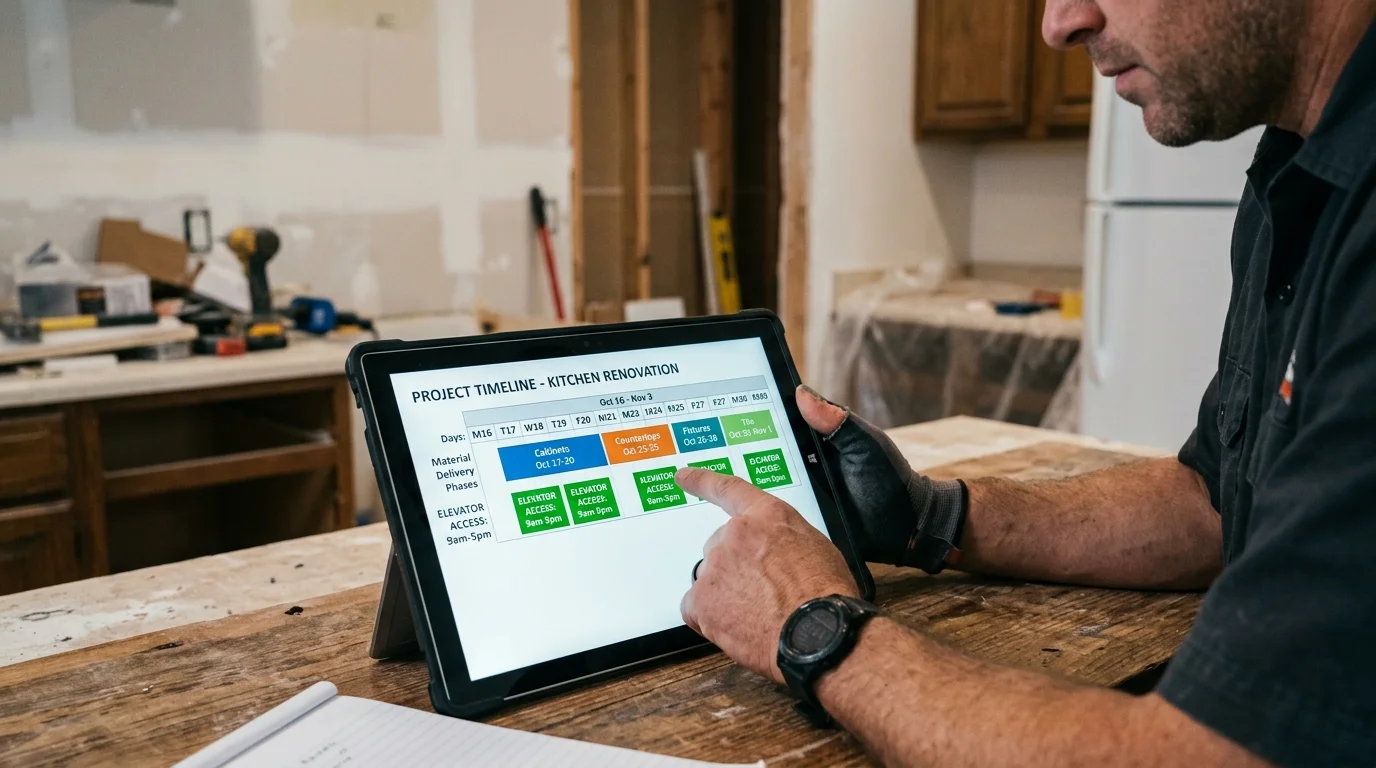
Start by asking your contractor for a detailed material list broken down by delivery phase: cabinets, countertops, plumbing fixtures, tile, drywall, and finishing materials. Each item has different delivery windows—cabinets may arrive early, while countertops often come mid-project after demolition and framing are complete. Work with your contractor to consolidate shipments where possible. Instead of three separate cabinet deliveries, negotiate with suppliers to combine orders into one or two trips.
Communicate elevator restrictions to all delivery companies before they arrive. Provide them with your building's elevator reservation number, approved delivery hours (typically 9 a.m. to 5 p.m. on weekdays), and any size or weight restrictions. Many delivery companies will refuse to work within tight windows if they're not informed upfront, so clarity prevents last-minute cancellations. Your contractor should handle this communication, but verify it happened—don't assume.
For unexpected delays or emergency material needs, establish a contingency plan with your HOA or building management. Some buildings allow same-day elevator access for genuine emergencies at a premium fee (often $100–$300 extra), but this varies. Know your building's policy before you need it.
Budget Considerations and Hidden Costs
Elevator reservation fees in Seattle condos typically range from $50 to $200 per reservation, depending on your building and the time slot. A standard kitchen or bathroom remodel might require 4–6 elevator reservations, adding $200–$1,200 to your project cost. Damage deposits (usually $500–$3,000, refundable) are separate and held until project completion.
Limited elevator access also increases labor costs. If your contractor can only move materials during narrow windows, they may charge premium rates for off-hours work or require longer project timelines to accommodate scheduling gaps. A contractor working around elevator restrictions might need an extra 1–2 weeks compared to a single-family home project, translating to additional labor charges.
To minimize costs, consider just-in-time delivery coordination: schedule materials to arrive only when your contractor is ready to install them, rather than storing everything in your unit for weeks. This reduces the risk of damage claims and frees up space. Some suppliers offer flexible delivery scheduling at no extra cost if you book in advance—ask about this when requesting quotes.
Ventilation and Permit Considerations for Seattle Condo Kitchen Remodels
Kitchen ventilation in Seattle condos presents a unique challenge that most single-family homeowners never face. Unlike a house where you can vent a range hood directly through an exterior wall, condo kitchens sit within a shared building envelope. This means your ventilation system must comply with Seattle's mechanical code while also navigating the physical constraints of shared walls, common areas, and building management approval.
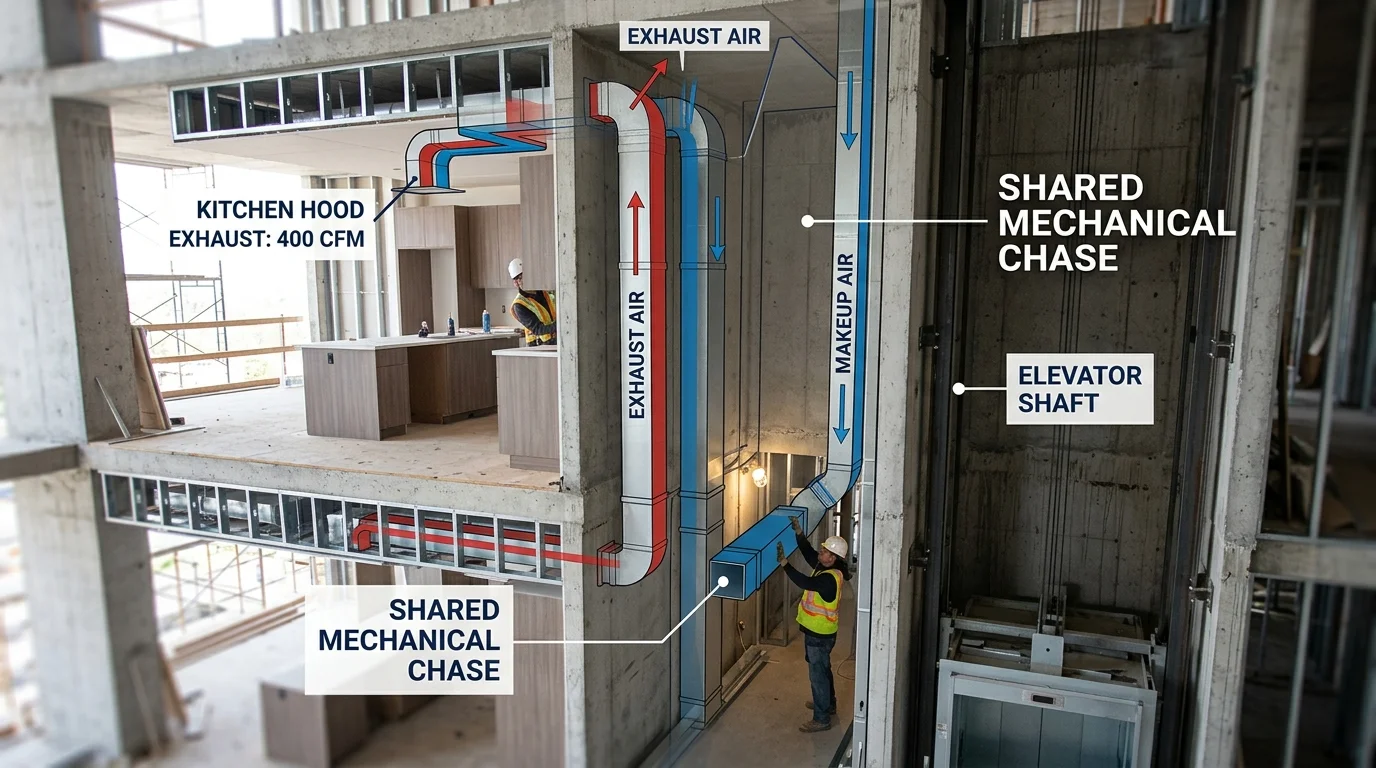
According to the 2018 Washington State Residential Code, kitchens require makeup air units for range hoods with 400+ CFM capacity. Seattle's mechanical code further mandates a minimum exhaust capacity of 100 CFM at 0.10 inches of water gauge for range hoods. These aren't suggestions—they're code requirements that your SDCI permit must address. If your remodel includes a high-powered range hood or commercial-grade cooktop, makeup air becomes mandatory, meaning you'll need a dedicated intake ductwork system running alongside your exhaust duct. This doubles your ductwork footprint and often requires routing through common hallways or vertical chases in the building.
Here's where elevator access becomes critical. Ductwork—especially rigid aluminum or galvanized steel ducts—cannot be bent like flexible ducting and requires careful installation. If your kitchen is on an upper floor and ductwork must run vertically through the building, it typically travels through the elevator shaft or shared mechanical spaces. Your contractor will need elevator reservations to transport duct sections, fittings, and installation equipment. Coordinate this timing with building management well in advance; they may restrict ductwork installation to specific hours to avoid disrupting other residents.
Before finalizing your design, request a pre-permit consultation with SDCI and obtain written approval from your HOA and building management on your ventilation routing. This prevents costly redesigns mid-project. For detailed guidance on navigating condo-specific kitchen requirements, review kitchen ventilation solutions tailored for Seattle condos.
Working with Contractors Who Understand Seattle Condo Elevator Rules
Hiring a contractor with genuine experience navigating Seattle condo remodels isn't just a convenience—it's essential to project success. A contractor unfamiliar with condo-specific elevator logistics, HOA approval processes, and permit coordination will create delays, cost overruns, and friction with building management that could have been prevented entirely.
The right contractor brings three critical advantages. First, they understand how to communicate with your building's management and HOA before work begins, securing written elevator reservations and access windows in advance. Second, they know Seattle's Department of Construction and Inspections (SDCI) requirements for condo projects and can coordinate permits efficiently. Third, they've developed relationships with local building managers, which smooths problem-solving when unexpected restrictions emerge mid-project.
Key questions to ask potential contractors:
- How many condo kitchen and bathroom remodels have you completed in Seattle in the past three years?
- Can you provide references from HOAs or building managers you've worked with?
- How do you handle elevator reservations, and what's your process for coordinating with building management?
- If elevator access is suddenly restricted, how would you adjust the schedule and timeline?
- Have you encountered SDCI inspection delays specific to condos, and how did you manage them?
- What's your experience with ventilation routing through shared mechanical spaces?
Licensed, bonded contractors like those at PNW Standard Remodel understand that condo remodels require different planning than single-family homes. They factor elevator logistics into initial timelines and budgets—preventing the shock of discovering mid-project that ductwork installation or cabinet delivery requires three weeks of advance HOA approval.
When unexpected elevator access issues arise—a building suddenly restricts hours, or mechanical work in the shaft delays your timeline—an experienced contractor has contingency plans. They may adjust material delivery schedules, coordinate with other trades, or temporarily relocate equipment staging areas. A contractor unfamiliar with condo constraints will simply stop work and pass the problem to you.
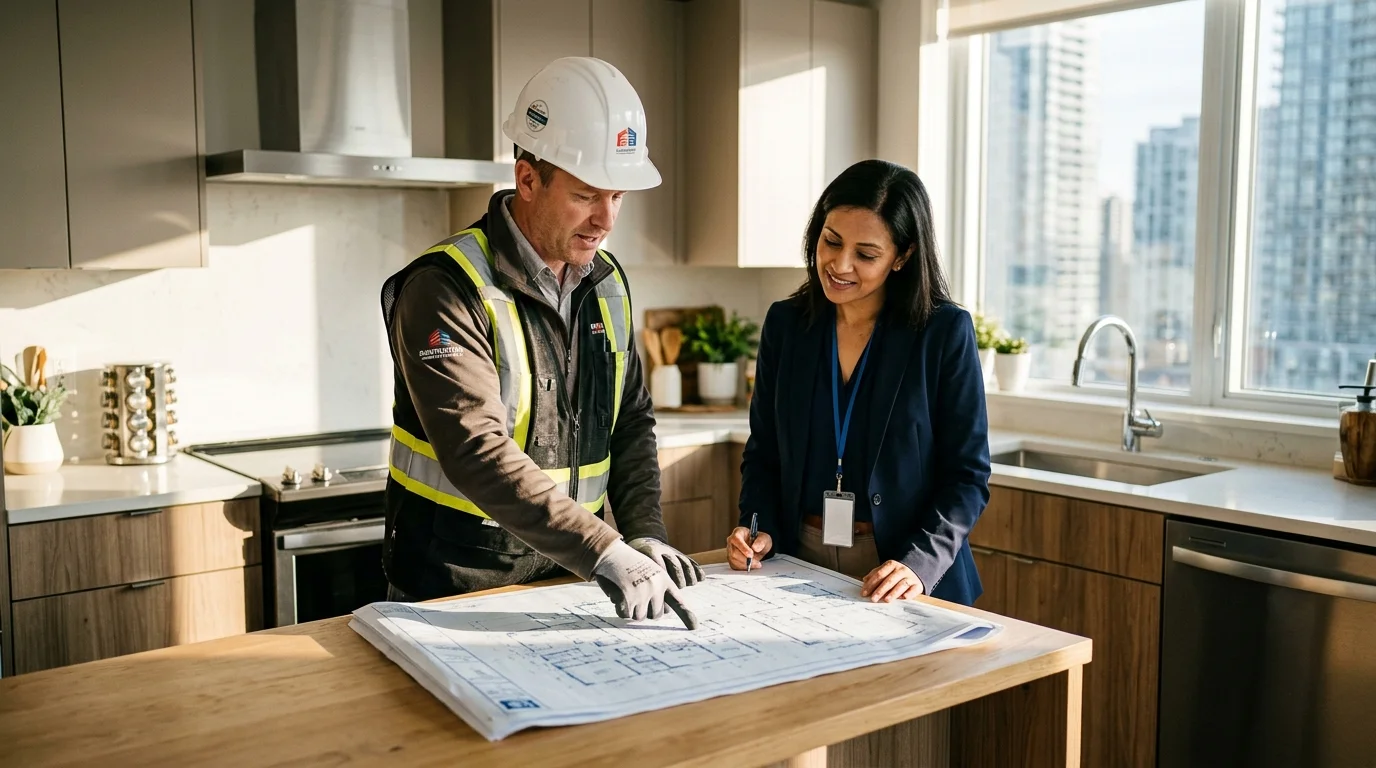
Before signing a contract, request a pre-project walk-through where your contractor meets with building management. This conversation clarifies elevator policies, identifies potential bottlenecks, and establishes the communication protocol for the entire project. It's the difference between smooth execution and constant friction.
Navigating Elevator Access: Key Takeaways for Your Seattle Condo Renovation
Elevator access during a condo remodel in Seattle isn't a minor logistical detail—it's often the single largest constraint on your timeline and budget. The difference between a smooth project and a frustrating one comes down to five critical steps taken before the first tool arrives on site.
Start by verifying your building's elevator specifications and Seattle building code compliance. Contact your building management and request the elevator's weight capacity, dimensions, and any restrictions on use during business hours. This determines whether your contractor can move materials efficiently or must stage everything in hallways and stairwells—a decision that adds weeks and thousands of dollars to kitchen and bathroom remodels. Cross-reference these restrictions with Seattle's International Building Code requirements to ensure your project timeline accounts for code-mandated access windows.
Secure HOA and building management approval in writing before signing your remodel contract. Many condo boards require 30–60 days' notice for elevator reservations, material deliveries, and contractor access. Getting this approval early prevents mid-project surprises and gives your contractor the certainty needed to order materials and schedule trades without constant delays.
Coordinate material deliveries and scheduling directly with your contractor. Large cabinets, appliances, and fixtures must arrive on specific dates when elevator access is guaranteed. A contractor experienced with Seattle condo remodels builds these windows into the project schedule from day one. When you're evaluating contractors, ask about their experience managing elevator logistics—this separates firms that understand condo constraints from those learning on your dime.
Budget for elevator-related costs and potential delays. Restricted access often means higher labor costs, extended timelines, and contingency staging. Experienced contractors factor this into estimates; if a bid seems unusually low, ask how they're planning elevator access.
Partner with licensed, bonded contractors who've navigated condo remodels in Seattle before. They understand the interplay between permits, HOA policies, and building code requirements. PNW Standard Remodel conducts pre-project walk-throughs with building management to clarify elevator policies and establish communication protocols—the foundation of a friction-free renovation.