(206) 707-5830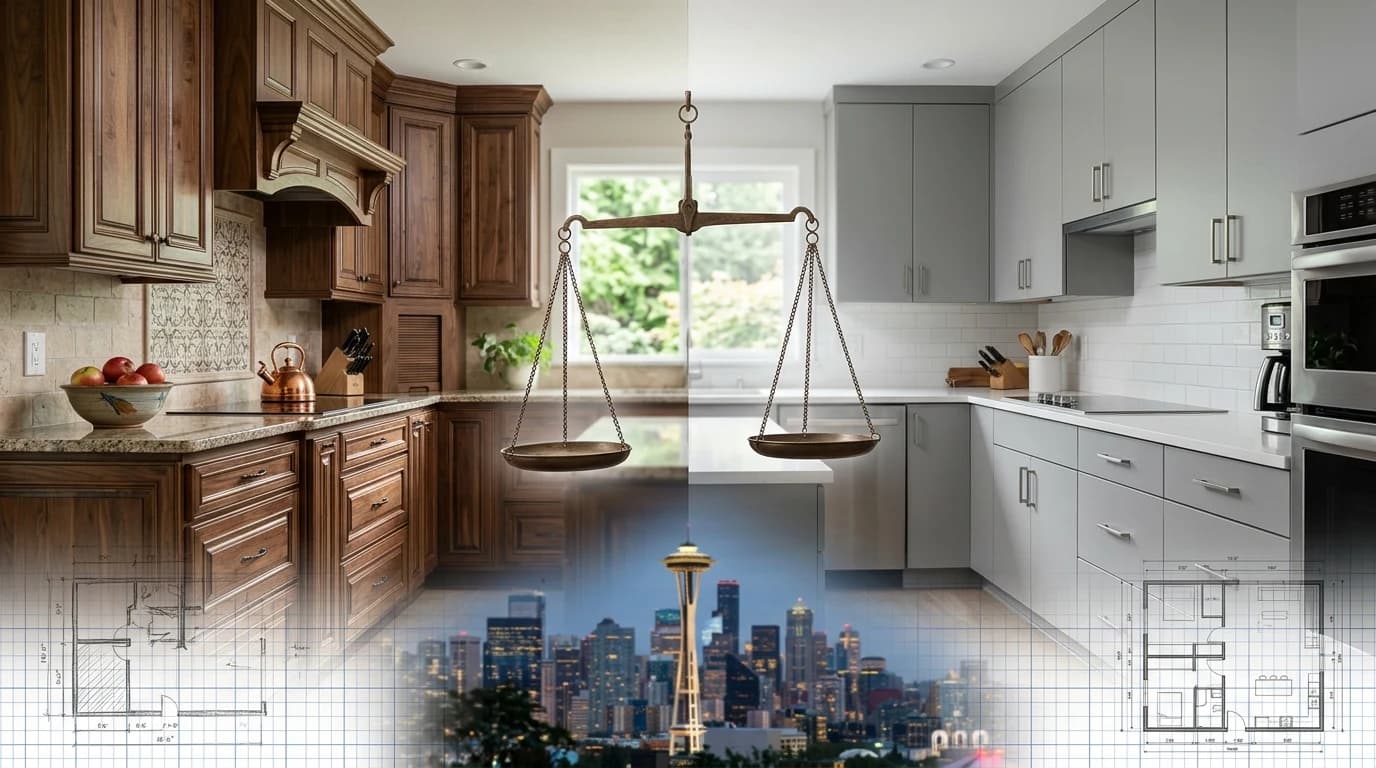

When planning a kitchen remodel in Seattle, few decisions carry as much weight as choosing between custom and semi-custom cabinets. These two options sit at opposite ends of the design and budget spectrum, yet both can transform your space beautifully—if they align with your priorities. The choice between custom versus semi-custom cabinets in Seattle hinges on three critical factors: how much you're willing to invest, how quickly you need the project finished, and whether your kitchen layout demands precision-engineered solutions or can work within standard dimensions.
Quick Answer: Choose semi-custom cabinets if you have a moderate budget, a flexible timeline of 8-12 weeks, and a kitchen layout that fits standard cabinet sizes. Choose custom cabinets if you have an unconventional space, specific design vision, or are willing to invest significantly for a kitchen that recoups 60 to 80 percent of its cost at resale, according to industry data. The right choice depends on your priorities—budget constraints, design complexity, and how you use your kitchen daily.
This guide walks you through the core differences between these cabinet types, how pricing and timelines compare, and the real-world scenarios where each option truly shines. You'll also discover how frameless cabinet designs fit into Seattle's modern kitchen aesthetic, and what factors like cabinet replacement costs and installation complexity mean for your remodel timeline. By the end, you'll have a clear framework for making the decision that fits your home and lifestyle.
Table of Contents
- Key Differences Between Custom and Semi-Custom Cabinets
- Design Flexibility and Customization Depth
- Materials, Construction Quality, and Durability
- Cost and Timeline Implications
- When Semi-Custom Cabinets Make Sense for Your Seattle Home
- Budget-Friendly Remodels with Standard Layouts
- Faster Project Completion Requirements
- When Custom Cabinets Justify the Investment
- Unusual Layouts and Challenging Spaces
- Achieving Your Specific Design Vision
- Materials, Construction Quality, and Long-Term Value
- Wood Species and Finish Options
- Construction Methods and Longevity
- Common Questions About Choosing Between Cabinet Types in Seattle
- How much more do custom cabinets cost compared to semi-custom in the Seattle area?
- Is it better to reface or replace existing cabinets?
- Can semi-custom cabinets fit unusual kitchen layouts?
- What's the typical lead time difference between custom and semi-custom?
- Making Your Final Cabinet Decision: Next Steps for Seattle Homeowners
Key Differences Between Custom and Semi-Custom Cabinets
The fundamental distinction between custom and semi-custom cabinets lies in how much control you have over every design element—and what that control costs in both dollars and time. Understanding these differences helps Seattle homeowners make a choice aligned with their budget, kitchen layout, and design vision.
| Aspect | Custom Cabinets | Semi-Custom Cabinets |
|---|---|---|
| Design Flexibility | Unlimited dimensions, materials, finishes, hardware, interior configurations | 15-30 pre-engineered finishes and door styles with limited modifications |
| Materials & Construction | Premium wood species, hand-crafted joinery, artisan finishing | Quality materials, standardized construction methods, machine-made components |
| Cost Range | $500–$1,500 per linear foot | $150–$700 per linear foot |
| Lead Time | 12–16+ weeks (complex projects may exceed 6 months) | 4–8 weeks for delivery |
| Best For | Unconventional spaces, specific design vision, high-end finishes | Standard kitchen layouts, moderate budgets, faster timelines |
Design Flexibility and Customization Depth
Custom cabinets are engineered to your exact specifications. Every dimension, material choice, interior configuration, and hardware detail is yours to define. If your Seattle kitchen has an angled wall, a ceiling that slopes, or a corner that demands a specialized storage solution, custom cabinetry can be built to fit perfectly. You choose the wood species—white oak, walnut, cherry, or maple—and specify the stain or paint finish down to the exact shade. Interior components like pull-out shelves, spice racks, and drawer dividers are designed for how you actually use your kitchen.
Semi-custom cabinets work from a manufacturer's pre-engineered base options. You select from available door styles and finishes, but modifications are limited. If your kitchen layout requires a cabinet that's an odd width or depth, semi-custom manufacturers may be able to adjust within narrow parameters—but at additional cost and timeline impact. This constraint matters less in standard rectangular kitchens but becomes restrictive in older Seattle homes with irregular dimensions.
Materials, Construction Quality, and Durability
Custom cabinet shops typically source premium hardwoods and employ hand-crafted joinery techniques. Dovetail joints, mortise-and-tenon construction, and solid wood frames are standard. Finishing is often done by hand, allowing for nuanced stains and protective coatings that age beautifully. White oak cabinets, popular in Pacific Northwest design, showcase grain character that deepens over time when built with this level of care.
Semi-custom manufacturers use quality materials—solid wood frames and plywood box construction—but rely on standardized, machine-driven assembly. This approach maintains consistency and reduces waste, but the result is more uniform and less artisanal. For most Seattle kitchens, semi-custom durability is entirely adequate; the difference becomes apparent only after 20+ years or with heavy daily use.
Cost and Timeline Implications
According to Custom Kitchen Cabinets, semi-custom cabinets typically cost $150 to $700 per linear foot, while custom cabinets range from $500 to $1,500 per linear foot. Semi-custom options are 15–30% cheaper overall, a meaningful difference on a 15-linear-foot kitchen island or full perimeter installation.
Timeline matters equally. Semi-custom cabinets ship in 4–8 weeks, allowing your entire remodel to stay on schedule. Custom cabinets take 12–16 weeks or longer, especially for complex designs or high-demand shops. If your kitchen remodel timeline is tight—or if you're coordinating with other trades—semi-custom's faster delivery becomes a decisive advantage. For homeowners considering cabinet replacement as part of a broader renovation, this speed differential can mean the difference between finishing in fall versus pushing into winter.
When Semi-Custom Cabinets Make Sense for Your Seattle Home
Semi-custom cabinets are the pragmatic choice for many Seattle homeowners—not because they're inferior to custom options, but because they solve real problems within real budgets. Understanding when semi-custom delivers the best value requires looking honestly at your kitchen's layout, your timeline, and what design flexibility actually matters for your daily life.
Budget-Friendly Remodels with Standard Layouts
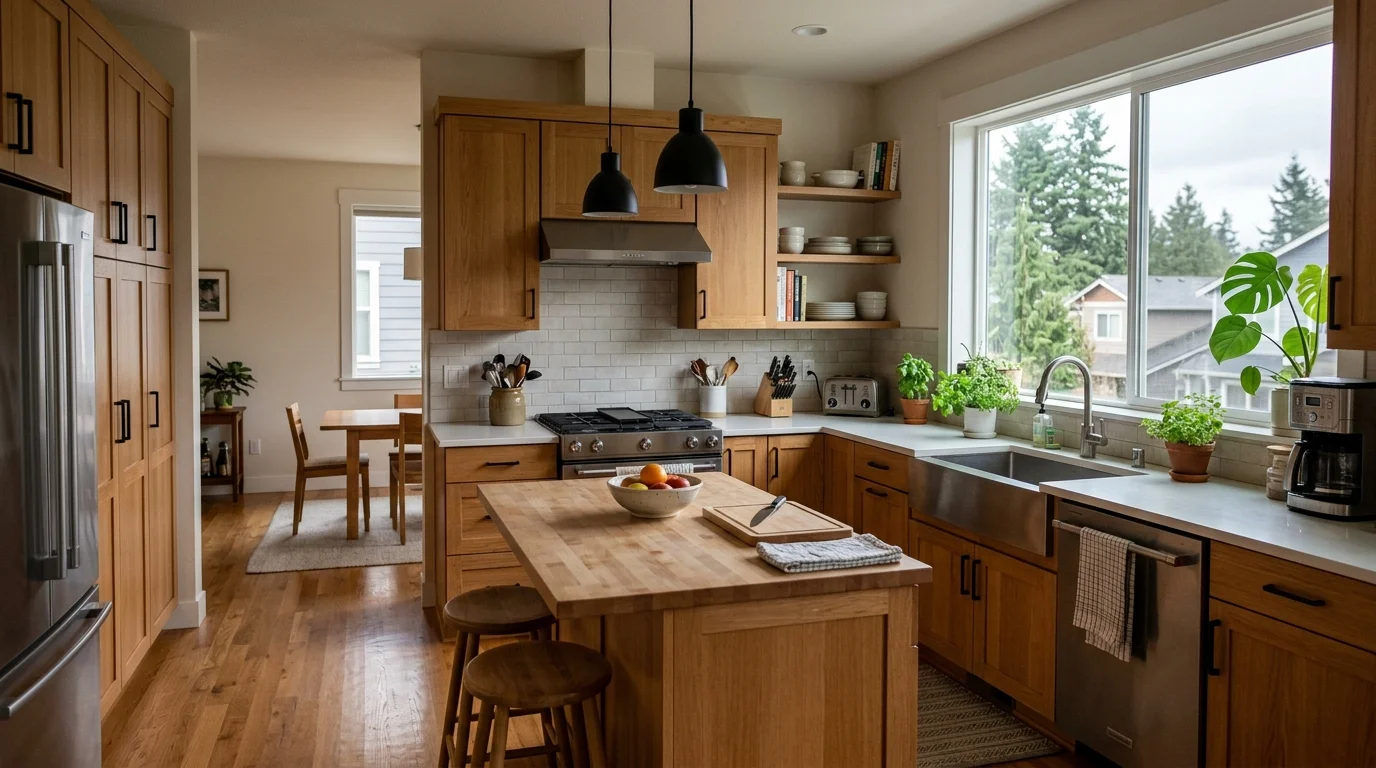
Most Seattle kitchens follow predictable footprints: galley layouts, L-shaped configurations, or island-centered designs. If your kitchen fits these conventional dimensions, semi-custom cabinets align perfectly with your space. There's no need to pay custom pricing for solutions that manufacturers have already perfected through thousands of installations.
The cost difference is substantial. Semi-custom cabinets typically run $150 to $700 per linear foot, while custom work ranges from $500 to $1,500 per linear foot. On a 15-linear-foot kitchen, that's easily $5,000–$10,000 in savings. For homeowners working with a fixed remodel budget, those savings redirect toward countertops, appliances, or lighting—upgrades that often have more visible impact on daily function and aesthetics.
Semi-custom also works exceptionally well if you're considering whether to replace cabinets entirely or pursue a refinishing approach. If your existing cabinet boxes are structurally sound, cabinet refinishing in Bellevue or Seattle can cost $4,500–$8,000 and preserve your layout. But if replacement is necessary, semi-custom gives you fresh cabinetry without custom-level expense.
Faster Project Completion Requirements
Timeline pressure is real. Semi-custom cabinets ship in 4–8 weeks, while custom builds stretch to 12–16 weeks or longer. If your kitchen needs to be operational by fall, or if you're coordinating with contractors on tight schedules, semi-custom's speed becomes decisive.
This matters especially in condo renovations, where extended kitchen downtime disrupts shared spaces and neighbor relationships. It also matters when you're managing multiple trades—plumbing, electrical, flooring—and every week of delay cascades into higher labor costs. Semi-custom's predictable lead time lets your contractor sequence the work efficiently, keeping the project on track and within budget.
When Custom Cabinets Justify the Investment
Custom cabinetry stops being a luxury choice and becomes a smart investment when your kitchen's architecture or design ambitions demand it. While semi-custom cabinets work beautifully for standard layouts, custom builds solve problems that off-the-shelf solutions simply cannot address—and they deliver lasting value that justifies the higher upfront cost.
Unusual Layouts and Challenging Spaces
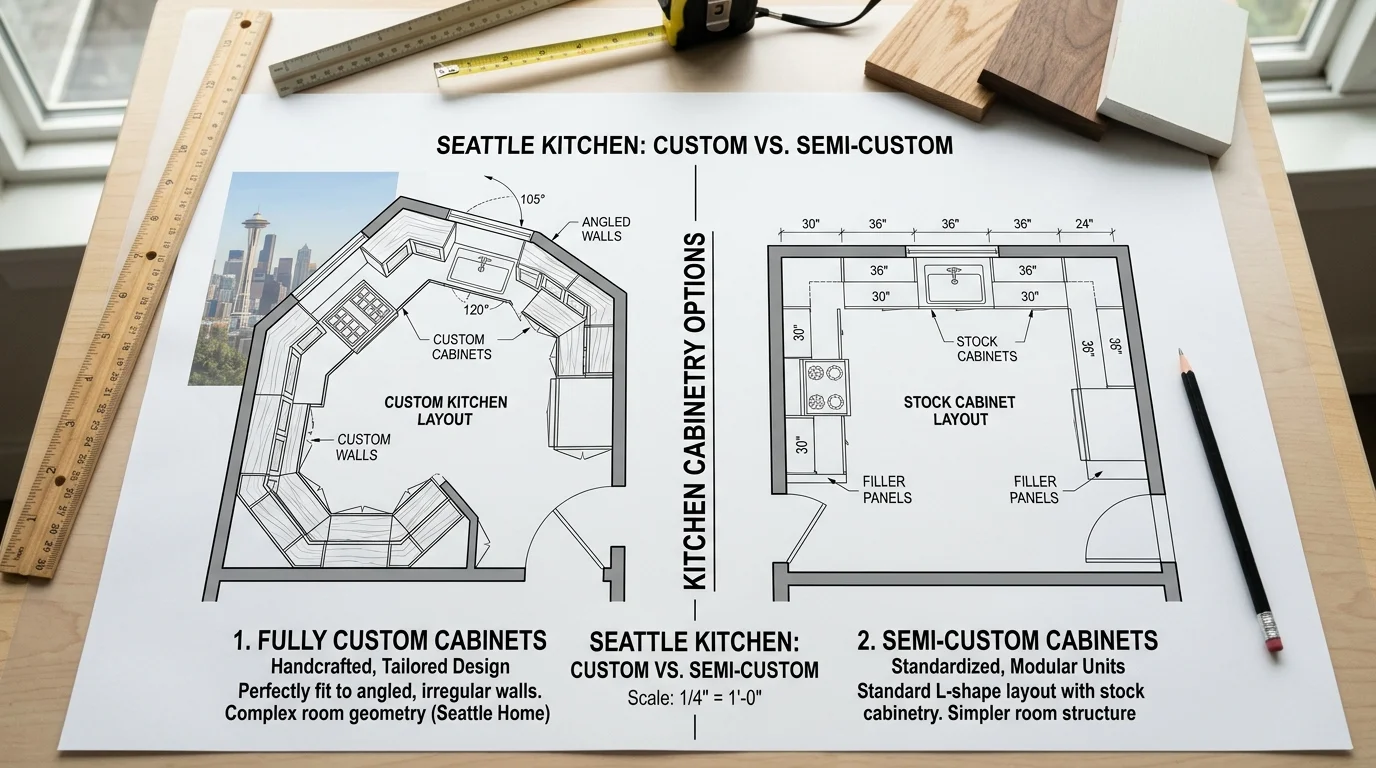
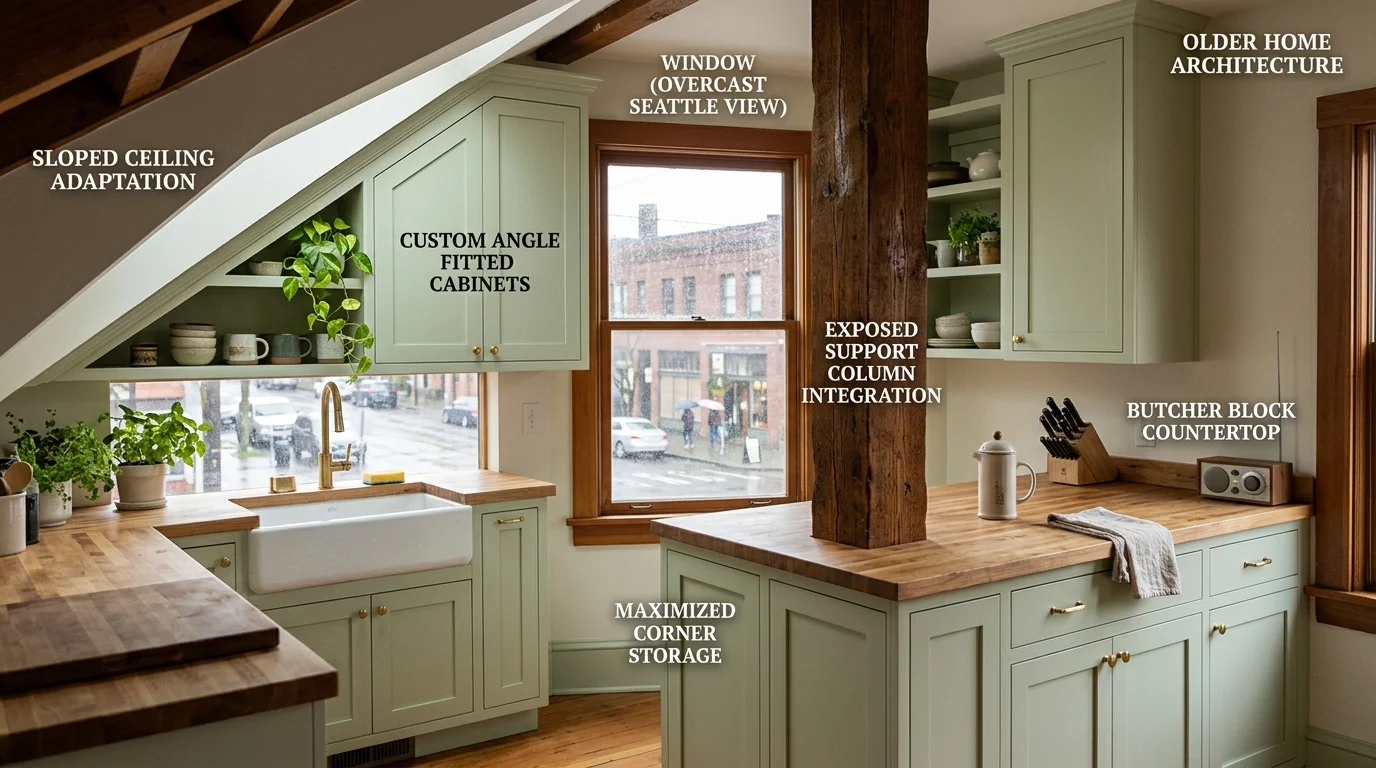
Seattle's older homes and Eastside residences often feature kitchens with sloped ceilings, angled walls, non-standard dimensions, or architectural quirks that make semi-custom cabinets fit awkwardly at best. A kitchen tucked under a cathedral ceiling, wrapped around a structural column, or squeezed into a narrow galley space needs cabinetry that follows the room's actual geometry, not a manufacturer's standard sizes.
Custom cabinets adapt to these constraints with precision. Builders can angle cabinet tops to match ceiling slopes, create fillers that blend seamlessly with irregular walls, and design around permanent fixtures without leaving wasted dead space. This matters especially in condo renovations, where every inch of storage becomes precious and layout flexibility is constrained by shared walls and existing infrastructure. Semi-custom's rigid dimensions would force you to sacrifice storage, accept visible gaps, or compromise the overall design flow.
Achieving Your Specific Design Vision
Beyond function, custom cabinets let you realize a precise aesthetic that reflects your home's character and your personal style. If you envision white oak cabinetry with hand-applied finishes, integrated wine coolers, or frameless European-style doors, custom builders can deliver exactly what you imagine. Semi-custom offers limited wood species and finish options; custom shops can source specialty materials and execute bespoke details that make your kitchen unmistakably yours.
Premium finishes—hand-painted cabinet faces, specialty hardware, integrated appliances, or signature joinery—are hallmarks of custom work. These details compound in value over time. A kitchen with thoughtfully designed custom cabinetry remains functional and beautiful for 20+ years, while semi-custom pieces may feel dated or require replacement sooner. When you're investing in a remodel that will anchor your home's value and your daily life, custom craftsmanship becomes the long-term choice that pays dividends in durability, aesthetics, and resale appeal.
Materials, Construction Quality, and Long-Term Value
The difference between custom and semi-custom cabinets becomes most visible when you examine what's actually holding them together—and what happens to them over time. Construction quality directly determines how your cabinets perform through years of daily use, humidity fluctuations, and the wear that comes with a Pacific Northwest kitchen.
Wood Species and Finish Options
Semi-custom manufacturers work with a curated but limited palette: typically five to eight wood species and finish options. You might choose between maple, cherry, oak, or hickory in a handful of pre-set stains—practical choices that balance cost and appeal. This standardization keeps production efficient and prices predictable, which is why semi-custom cabinets often feel familiar when you walk through showrooms across Seattle and Bellevue.
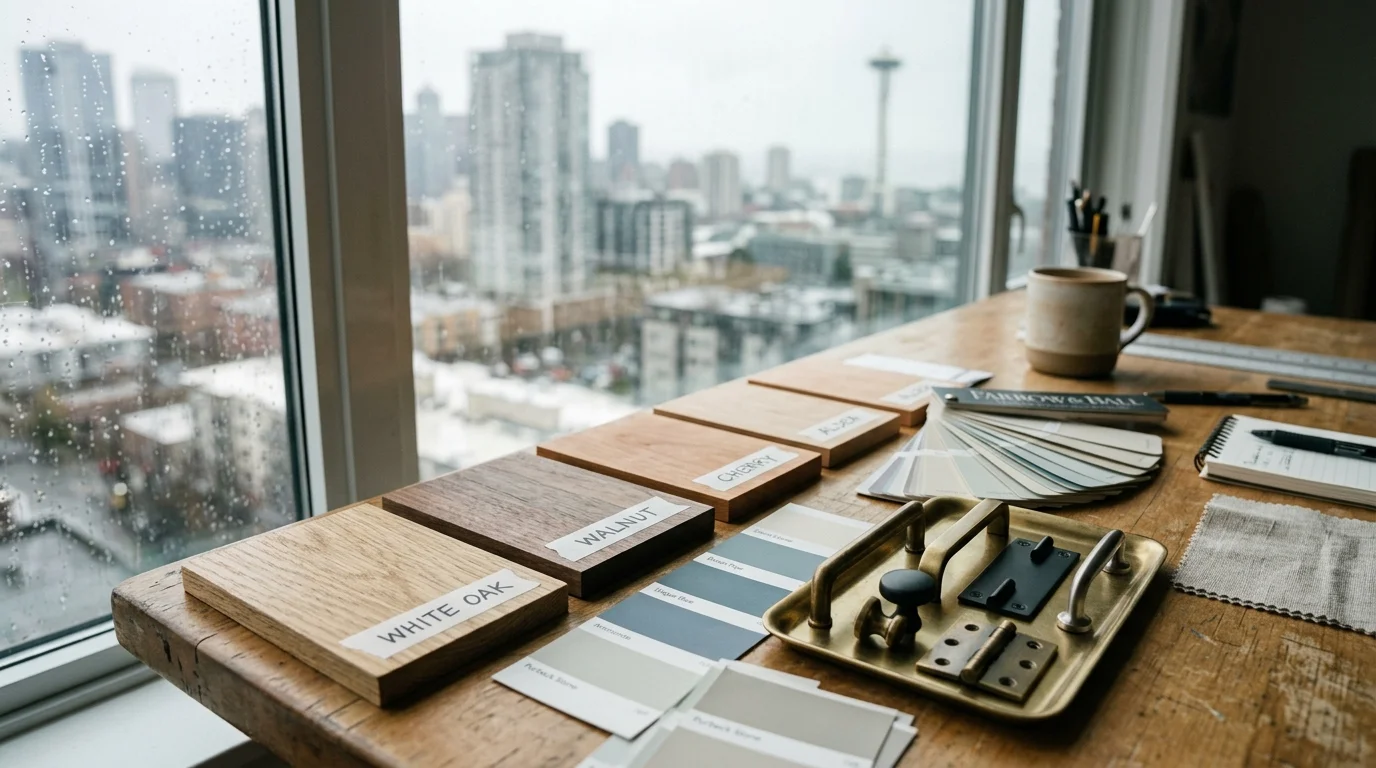
Custom cabinet builders, by contrast, source from virtually unlimited wood species. White oak, walnut, cherry, alder, or specialty woods like reclaimed barn wood become options when you're designing from scratch. Finishes range from hand-applied lacquers to oil-rubbed stains to contemporary matte paints—each executed to your exact specifications. This flexibility matters in Seattle's design-conscious market, where homeowners often want cabinetry that echoes their home's architectural character rather than fitting into a manufacturer's predetermined aesthetic.
Construction Methods and Longevity
Semi-custom cabinets are built on standardized assembly lines using consistent joinery methods—typically pocket holes, dowels, or stapled joints. These techniques are reliable and cost-effective, and they work well for the lifespan you can reasonably expect. According to research on cabinet durability, semi-custom cabinets typically last 15 to 25 years with standard care, offering solid value for homeowners planning to stay in their home for a decade or more.
Custom cabinets, built by hand in smaller shops, employ traditional joinery methods—mortise-and-tenon joints, dovetail joinery, and solid wood construction throughout. These techniques create cabinets that can last 30 to 50 years, weathering humidity swings and daily use without structural degradation. The difference compounds: a custom cabinet built with proper hardwood and joinery simply performs better under stress and age.
When your cabinetry eventually shows wear, you have options. Professional cabinet refinishing in Bellevue or cabinet refacing can extend the life of either option, refreshing finishes and hardware without full replacement. However, custom cabinets respond better to refinishing because their solid construction allows for sanding, staining, and repainting without risk of delamination or joint failure. Semi-custom pieces, with their engineered veneers and stapled joints, have narrower refinishing options and may not survive aggressive restoration work.
Winner: Custom cabinets deliver superior longevity and refinishing potential, making them the better long-term investment despite higher initial cost.
Common Questions About Choosing Between Cabinet Types in Seattle
How much more do custom cabinets cost compared to semi-custom in the Seattle area?
Custom cabinets typically cost 30–50% more than semi-custom options, though the gap widens with material complexity and finish specifications. According to Remodel Right Seattle, cabinet refacing runs $4,000 to $12,000, while full replacement starts at $15,000 for stock and climbs to $60,000+ for fully custom builds. The difference reflects labor intensity—custom work requires detailed measurements, design consultations, and on-site adjustments that semi-custom manufacturers handle through standardized processes. Local Seattle labor rates and material sourcing also influence final pricing. Your exact cost depends on wood species, hardware quality, finish complexity, and whether your layout demands structural modifications.
Is it better to reface or replace existing cabinets?
Cabinet refacing makes sense when your cabinet boxes are structurally sound but the appearance is dated. Cabinet refacing saves 30–50% compared to full replacement and typically takes 3–5 days versus several weeks for complete replacement. Refacing works well if your layout functions properly and you only need visual refresh—new doors, drawer fronts, and hardware transform the kitchen affordably. However, replacement becomes necessary when boxes show water damage, joints fail, or your layout no longer serves your needs. If you're considering a complete kitchen remodel timeline in Seattle, replacement often pairs with plumbing or electrical updates that justify the full project cost.
Can semi-custom cabinets fit unusual kitchen layouts?
Semi-custom manufacturers build flexibility into their systems, but true architectural oddities present real constraints. Most can accommodate slight angles, alcoves, and non-standard widths through modifications and filler panels. However, kitchens with severely sloped ceilings, angled walls, or load-bearing obstacles often exceed semi-custom tolerances. Custom cabinetry shines here—craftspeople build around your space's actual dimensions rather than forcing standardized modules into compromised positions. If your Seattle kitchen has unusual geometry, request detailed layout drawings during the design phase so your cabinet supplier can honestly assess feasibility before you commit.
What's the typical lead time difference between custom and semi-custom?
Semi-custom cabinets typically arrive in 8–12 weeks from order to delivery, while custom work spans 12–16+ weeks depending on complexity and current manufacturer demand. The semi-custom advantage comes from pre-engineered components and established production schedules. Custom builds require design refinement, material procurement, and hand-assembly time that can't be rushed without compromising quality. If your remodel has a hard deadline, semi-custom offers more predictability. However, both timelines assume your contractor submits accurate measurements and specifications upfront—errors force delays regardless of cabinet type.
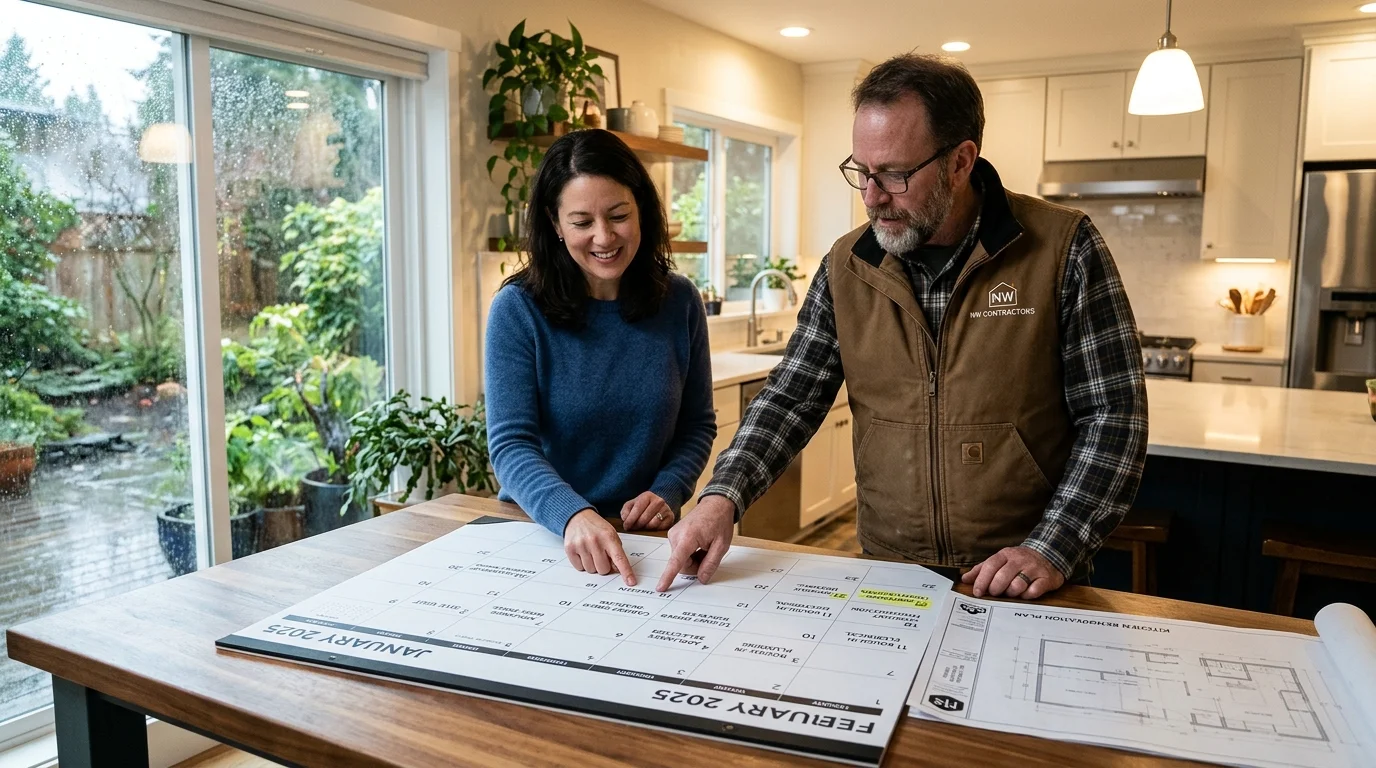
Making Your Final Cabinet Decision: Next Steps for Seattle Homeowners
The choice between custom and semi-custom cabinets ultimately hinges on three factors: your kitchen's layout, your design vision, and your timeline. Semi-custom cabinets make financial sense for standard layouts and straightforward aesthetics—they deliver solid construction at predictable costs, typically running 8–12 weeks from order to installation. They're the practical choice when your Seattle kitchen follows conventional dimensions and you're comfortable working within established design parameters.
Custom cabinetry justifies its premium price tag when your space demands it: sloped ceilings, load-bearing obstacles, or architectural quirks that semi-custom modules simply won't accommodate. If you have a specific design ambition—a particular wood species, hand-applied finishes, or integrated appliance solutions—custom work gives you control that semi-custom options can't match. The longer lead time (12–16+ weeks) becomes irrelevant when the alternative is forcing compromised cabinetry into a space where it doesn't belong.
Before committing, request detailed layout drawings and written specifications from your cabinet supplier. This prevents costly errors and lets them honestly assess whether semi-custom tolerances will work or whether custom construction is necessary. Compare quotes side-by-side, including delivery timelines and warranty coverage. If you're uncertain about kitchen remodel timelines or want guidance specific to smaller kitchens, our team has worked through these decisions with hundreds of Seattle homeowners.
Ready to move forward? Schedule a free estimate with PNW Standard Remodel. We'll assess your kitchen's actual dimensions, discuss your design priorities, and help you choose the cabinet option that delivers the best value for your specific project. No obligation—just honest guidance from professionals who've installed both types in Seattle homes.