(206) 707-5830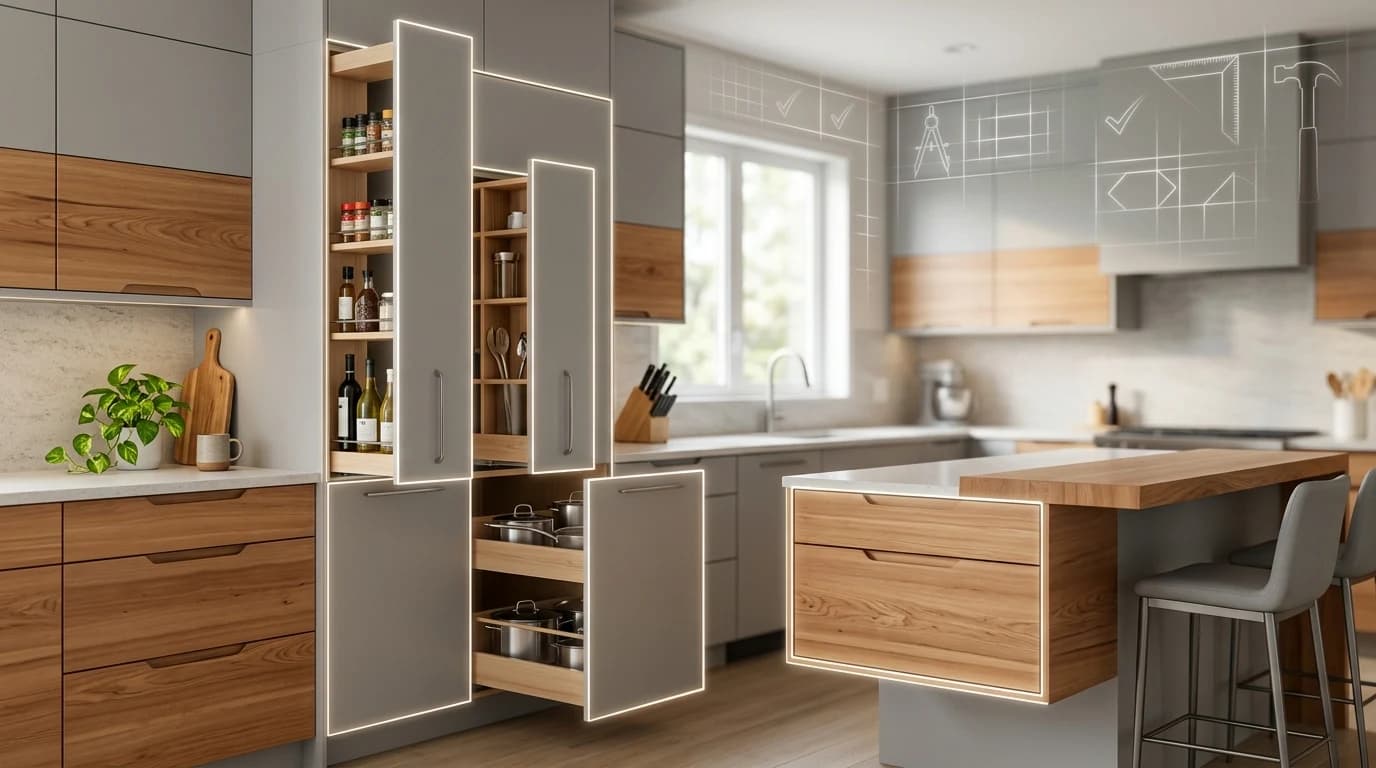

Seattle's compact kitchens present a unique design challenge. Many older homes in neighborhoods like Capitol Hill, Fremont, and Ballard feature galley-style layouts with limited counter space and tight footprints—a reality that demands smart cabinet solutions rather than standard off-the-shelf approaches. Small kitchens aren't just about fitting more stuff into less space; they're about choosing cabinetry that maximizes functionality while maintaining the clean, modern aesthetic Seattle homeowners value.
Quick Answer: The best cabinet options for small Seattle kitchens include frameless cabinets that eliminate bulky frames and create an open feel, custom or semi-custom cabinetry tailored to your exact dimensions, and vertical storage solutions that capitalize on wall height. Frameless designs work particularly well in compact spaces because they provide more interior volume and a contemporary look that complements Seattle's design preferences.
This guide walks you through the cabinet styles, materials, and layout strategies that work best for small kitchens in the Pacific Northwest. You'll discover how custom cabinets versus semi-custom options compare in cost and flexibility, learn which storage solutions maximize every inch, and understand how to plan a remodel that doesn't sacrifice style for function. Whether you're working with a 70-square-foot galley or a tight corner kitchen in a Ballard bungalow, the right cabinetry choice can transform your space into something both efficient and beautiful.
Table of Contents
- Understanding Cabinet Types: Custom, Semi-Custom, and Stock Options
- Space-Maximizing Cabinet Designs for Compact Seattle Kitchens
- Material and Finish Options That Work in Seattle Homes
- Cabinet Refacing and Refinishing: Cost-Effective Alternatives
- Estimating Costs and Timelines for Seattle Cabinet Projects
- Common Questions About Small Kitchen Cabinets in Seattle
- Choosing Your Ideal Cabinet Solution for a Compact Seattle Kitchen
Understanding Cabinet Types: Custom, Semi-Custom, and Stock Options
When planning a small kitchen remodel in Seattle, understanding the three main cabinet categories is essential to making a choice that aligns with your budget, timeline, and design vision. Each option offers distinct advantages and trade-offs, and the right selection depends on how much flexibility you need and how much you're willing to invest.
Custom cabinets are built from scratch to your exact specifications. A designer works with you to create cabinetry that fits your kitchen's unique dimensions, layout, and aesthetic preferences. This means you control materials, finishes, hardware, and interior organization down to the smallest detail. The trade-off is cost and time—custom cabinets typically run $500–$1,200 per linear foot, with most Seattle kitchens falling in the $13,000–$30,000 range. Lead times stretch 8–12 weeks or longer, making this option best for homeowners who aren't in a rush and want truly bespoke solutions.
Semi-custom cabinets occupy the middle ground. Manufacturers offer a range of standard sizes, styles, and configurations that you can modify within their system. You might choose door styles, finishes, and hardware from preset options, and some interior features can be customized. This approach costs $150–$400 per linear foot—significantly less than fully custom work—while still delivering personalization. Lead times typically run 4–8 weeks, making semi-custom a practical choice for small kitchens where you want tailored solutions without the premium price tag.
Stock cabinets are pre-made, off-the-shelf units in standard sizes. IKEA and similar retailers offer this option at $80–$200 per linear foot. Stock cabinets arrive quickly (often within weeks) and work well if your kitchen dimensions align with standard measurements. However, they offer minimal customization and may feel generic in a design-conscious Seattle home.
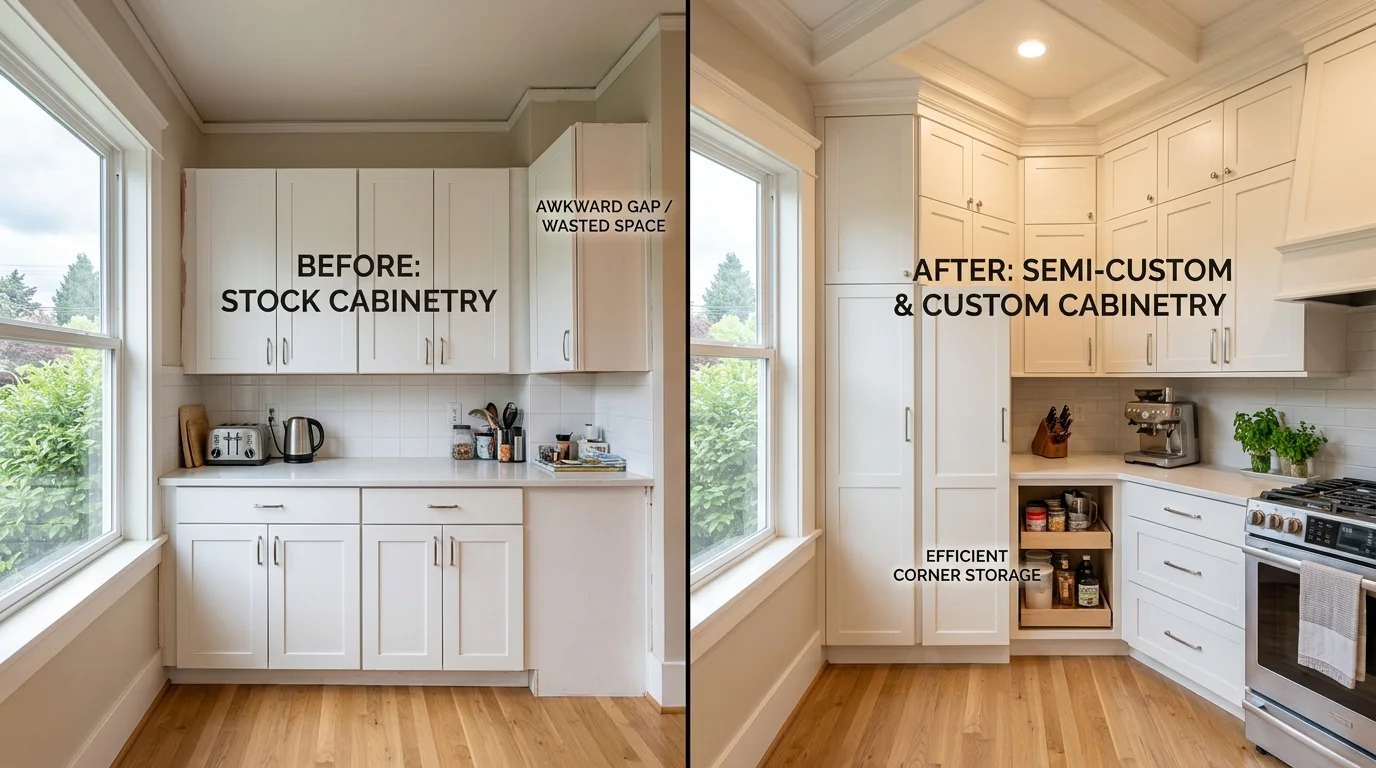
For small kitchens, semi-custom cabinets often strike the best balance. They're more affordable than fully custom options while offering enough flexibility to maximize tight spaces. When comparing custom cabinets versus semi-custom solutions for Seattle projects, consider that semi-custom work delivers 80% of the customization at 40% of the cost—a compelling equation for homeowners working with limited square footage.
Space-Maximizing Cabinet Designs for Compact Seattle Kitchens
Small Seattle kitchens demand strategic thinking. The difference between a cramped, inefficient space and one that feels open and functional often comes down to how cabinets are designed and positioned. Rather than simply fitting standard units into tight corners, the best approach involves intentional design choices that maximize every inch.
Vertical storage is your most powerful tool. Instead of relying solely on base and wall cabinets, extend cabinetry to the ceiling. This captures dead space that would otherwise sit empty and creates visual continuity that makes rooms feel larger. Tall pantry cabinets, floor-to-ceiling shelving, and upper cabinets that reach 10 feet all multiply your storage without consuming additional floor space. In Seattle homes where square footage is precious, this vertical strategy transforms functionality without the footprint penalty of horizontal expansion.
Corner optimization separates mediocre small kitchens from genuinely livable ones. Dead corners waste space that could work harder. Solutions like lazy Susans, pull-out corner drawers, and diagonal cabinets with angled doors make corner real estate accessible and functional. These aren't afterthoughts—they're essential investments that reclaim 10-15% of your total cabinet capacity.
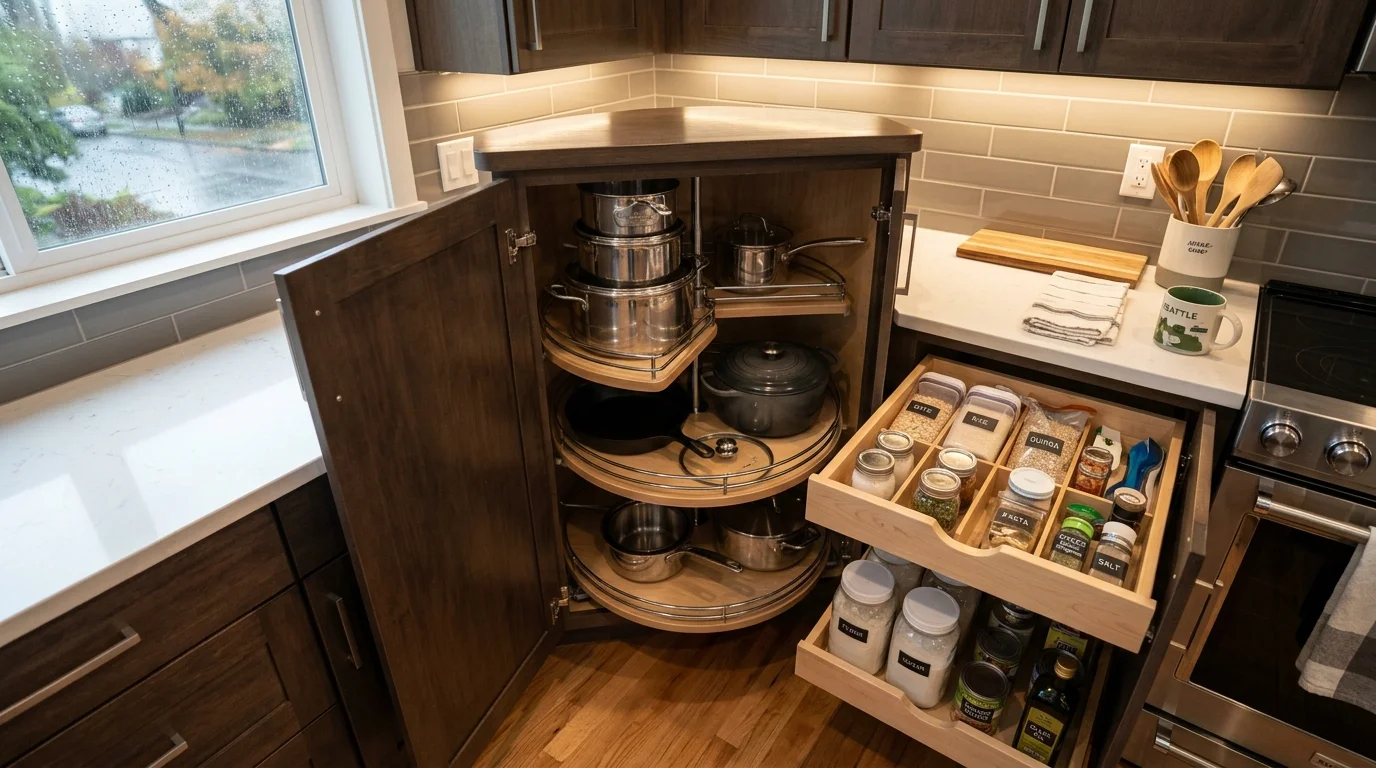
Frameless cabinets offer a distinct advantage in compact kitchens. According to research from Next Day Cabinets, frameless designs provide 10-15% more interior storage space by eliminating the face frame, with drawers up to 1.5 inches wider than framed alternatives of the same external dimensions. For a small kitchen where every inch matters, this translates to meaningful gains in usable storage. Beyond capacity, frameless cabinets create a cleaner, more contemporary aesthetic that visually expands tight spaces.
Consider cabinet refacing versus replacing when your existing layout works but aesthetics have dated. Refacing preserves the structural footprint while updating doors, hardware, and finishes—a smart middle ground for kitchens where reconfiguration isn't necessary. This approach costs significantly less than full replacement while delivering the visual refresh small kitchens need.
Real Seattle homes demonstrate these principles consistently. Homeowners who invested in vertical storage, optimized corners, and chose frameless construction report feeling less cramped and gaining unexpected storage capacity. The key is treating cabinet design not as an afterthought but as the foundational strategy for making small kitchens work.
Material and Finish Options That Work in Seattle Homes
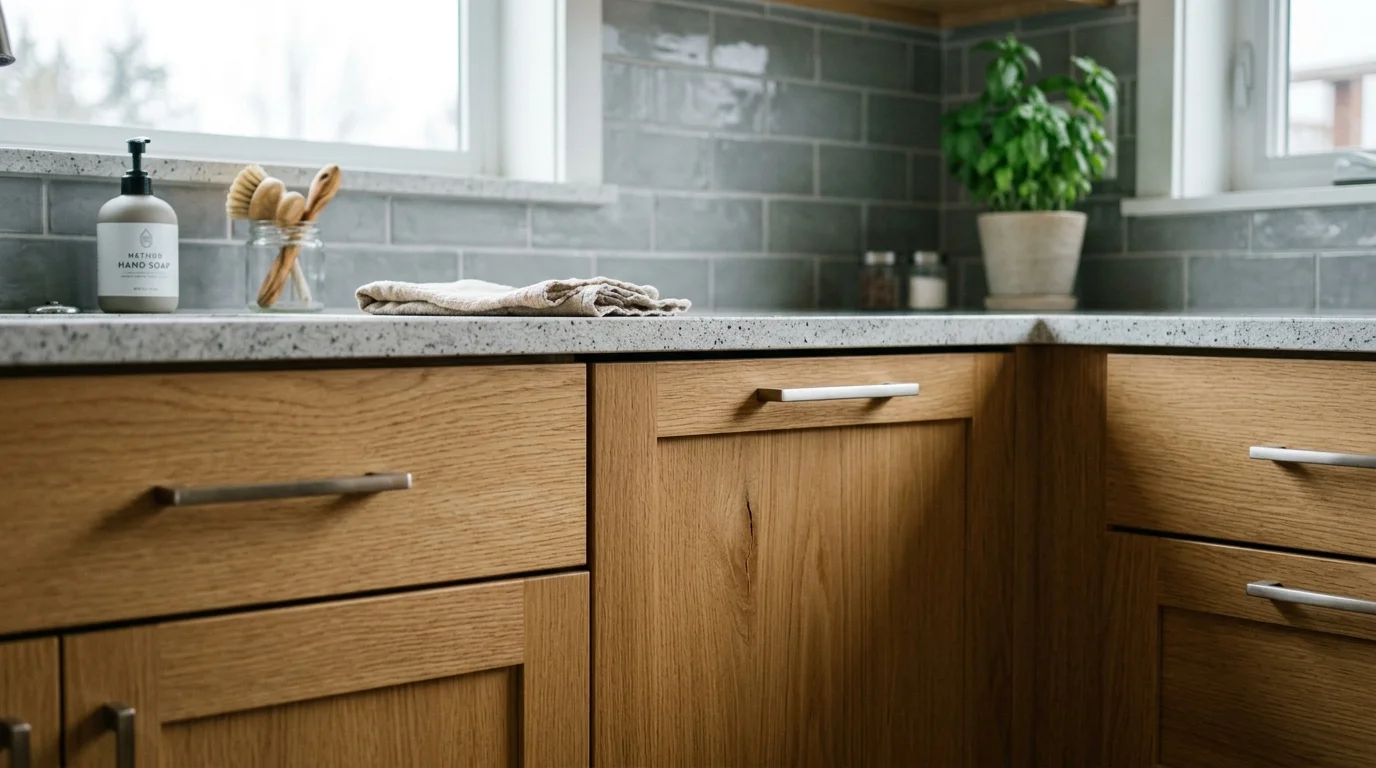
Wood species and finish selection matter far more in the Pacific Northwest than in drier climates. Seattle's persistent moisture and humidity fluctuations demand materials that won't warp, swell, or deteriorate over time. White oak has emerged as the standout choice for Seattle kitchens, and for good reason. According to research on wood species for Pacific Northwest climates, white oak is dense with a closed grain structure that resists moisture absorption far better than softer species like pine or cherry. This stability is critical in small kitchens where cabinet doors that stick or warp become immediate frustrations in tight quarters.
Beyond durability, white oak aligns perfectly with current design trends. Per Washington Construction's 2026 kitchen trends report, Seattle homeowners are shifting away from all-white kitchens toward warm white oak tones and natural wood finishes that bring warmth and authenticity to compact spaces. The grain pattern and honey-to-amber coloring make small kitchens feel less sterile and more inviting without overwhelming the visual field.
When considering cabinet painting versus refinishing, painted finishes remain popular for small Seattle homes because they create visual continuity and can brighten cramped layouts. High-quality cabinet paint in soft whites, warm grays, or muted greens expands perceived space while hiding wood imperfections. However, painted finishes require more maintenance in humid climates—proper sealing and occasional touch-ups prevent moisture from creeping under the paint and causing bubbling or peeling.
For homeowners drawn to natural wood, matte or satin polyurethane finishes outperform high-gloss options in Seattle's climate. These finishes allow wood to breathe slightly while providing moisture protection, and they hide fingerprints better than glossy alternatives—a practical advantage in small kitchens where cabinet faces see constant contact. Hardware finish matters too; stainless steel or brushed nickel hardware resists corrosion from humidity better than polished brass or chrome.
The key is treating material selection as climate-driven, not purely aesthetic. Your cabinet choice should work with Seattle's environment, not against it.
Cabinet Refacing and Refinishing: Cost-Effective Alternatives
If your kitchen cabinets are structurally sound but visually tired, refacing and refinishing offer compelling alternatives to complete replacement. These approaches preserve your existing cabinet boxes—the most expensive component—while transforming their appearance. Understanding the distinctions between these methods helps you choose the right solution for your Seattle kitchen and budget.
Refinishing means applying a fresh stain or paint directly to existing cabinet surfaces. This is the most affordable option, typically costing $2,000–$5,000 for a standard kitchen. Refinishing works best when your cabinet boxes are in good condition and you're simply tired of the current color. However, it doesn't address worn hardware, damaged door edges, or outdated cabinet styles. The process takes 5–7 days, and your kitchen remains largely functional.
Refacing is more comprehensive. It involves replacing cabinet doors, drawer fronts, and visible side panels while keeping the original boxes intact. New veneers or solid wood faces give your kitchen a completely updated look, and you can choose from modern styles and finishes. According to Keystone Kitchens, cabinet refacing in the Seattle and Bellevue area typically costs between $6,000 and $18,000, which is 40–60% less than full replacement while achieving a near-identical visual result. Most refacing projects complete in 3 to 5 days, keeping disruption minimal.
Painting falls between refinishing and refacing. Professional cabinet painting ($3,000–$8,000) provides better durability than basic refinishing and allows bold color choices. High-quality primer and paint systems resist Seattle's humidity better than DIY approaches, and the finish lasts 7–10 years with proper maintenance.
| Method | Cost Range | Timeline | Best For |
|---|---|---|---|
| Refinishing | $2,000–$5,000 | 5–7 days | Color updates, tight budgets |
| Painting | $3,000–$8,000 | 5–7 days | Bold colors, durability |
| Refacing | $6,000–$18,000 | 3–5 days | Style overhauls, modern looks |
Choose refacing if your cabinet layout feels outdated or hardware is worn. Choose refinishing or painting if structure is solid and you simply want a fresh appearance. Both preserve your kitchen's footprint—critical in Seattle's compact homes—while delivering dramatic visual impact at a fraction of replacement cost.
Estimating Costs and Timelines for Seattle Cabinet Projects
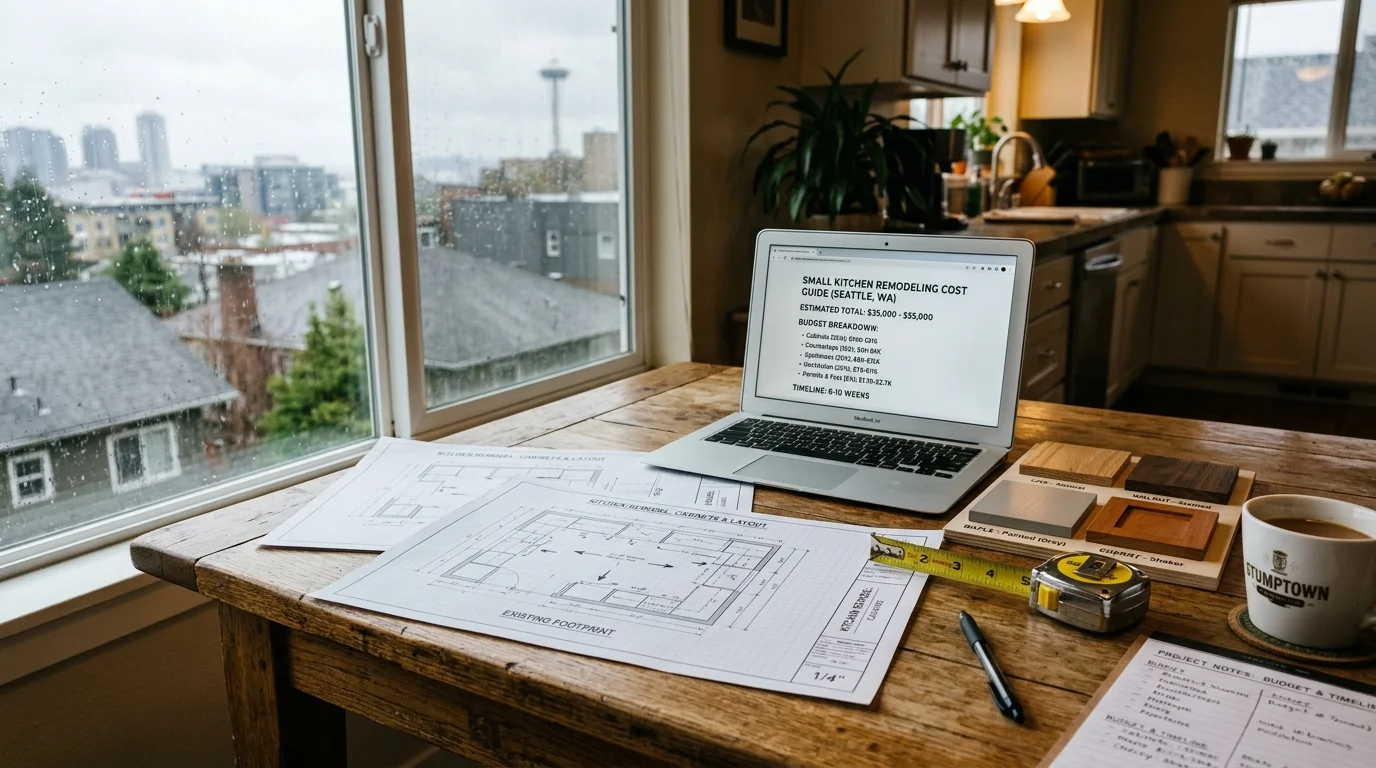
Cabinet costs dominate kitchen remodel budgets in Seattle. According to research from Remodel Right Seattle, cabinets typically represent 30–40% of your total kitchen remodel investment, making them the single largest line item and the biggest source of budget variation across projects.
Your actual cabinet replacement cost in Seattle depends on three primary factors: cabinet type (stock, semi-custom, or custom), material selection, and whether you're replacing or refacing existing structures. Stock cabinets run $3,000–$8,000 for a small kitchen, semi-custom options range from $8,000–$20,000, and fully custom cabinetry climbs to $15,000–$35,000 or beyond. These prices include installation but not countertops, hardware, or backsplash work.
Lead times vary significantly by cabinet type. Semi-custom cabinets typically require 6–14 weeks from order to delivery, while fully custom cabinetry takes 12–20 weeks. Stock cabinets ship within 1–2 weeks, making them ideal if your timeline is tight. Installation itself usually takes 3–5 days for most small kitchens, though electrical and plumbing work around new cabinet placement can extend the overall project.
If budget constraints are pressing, consider cabinet refacing or refinishing as alternatives that preserve your kitchen's footprint—critical in Seattle's compact homes. These approaches cost significantly less while delivering visual transformation in days rather than weeks. For detailed pricing on refacing specifically, explore our complete cabinet refacing cost guide for Bellevue, which applies to Seattle-area projects as well.
Plan for 8–16 weeks total if you're replacing cabinets, accounting for design consultation, ordering, manufacturing, and installation. Factor in an additional 2–4 weeks if your project requires Seattle building permits.
Common Questions About Small Kitchen Cabinets in Seattle
Q: How durable are stock cabinets in Seattle's humid climate?
Stock cabinets hold up well if they're solid wood or quality plywood construction—the Pacific Northwest's moisture demands this. Avoid particleboard in humid kitchens; it swells and deteriorates faster. Most stock options from reputable manufacturers are engineered for durability, though they won't match the longevity of semi-custom or custom builds. Proper ventilation and regular maintenance (wiping spills promptly, using exhaust fans) extend their lifespan significantly.
Q: Should I refurbish my existing cabinets or replace them entirely?
If your cabinet boxes are structurally sound—no warping, water damage, or loose joints—refinishing or refacing makes financial sense. These approaches cost 40–60% less than replacement and take days rather than weeks. However, if doors are damaged, hinges are failing, or internal organization is poor, replacement gives you better functionality and modern storage solutions tailored to your small kitchen's layout.
Q: What's the best cabinet style for a compact Seattle kitchen?
Flat-panel or shaker doors create a streamlined look that makes small spaces feel larger. Light finishes (whites, soft grays) reflect light and open up the room, while vertical grain patterns draw the eye upward. Consider Bellmont cabinets for Seattle kitchen remodels if you want mid-range quality with clean, modern aesthetics suited to the Pacific Northwest aesthetic.
Q: How do I maximize storage in a tiny kitchen?
Tall cabinets (floor to ceiling) use vertical space efficiently. Pull-out shelves, lazy Susans, and drawer organizers transform dead zones into functional storage. Open shelving above counters works for frequently used items but requires careful styling in small spaces.
Q: What maintenance do Seattle cabinets really need?
Wipe spills immediately to prevent moisture damage. Use mild soap and water for cleaning; avoid harsh chemicals. Keep exhaust fans running during cooking to manage humidity. Annual inspection of hinges and hardware prevents costly repairs later.
Choosing Your Ideal Cabinet Solution for a Compact Seattle Kitchen
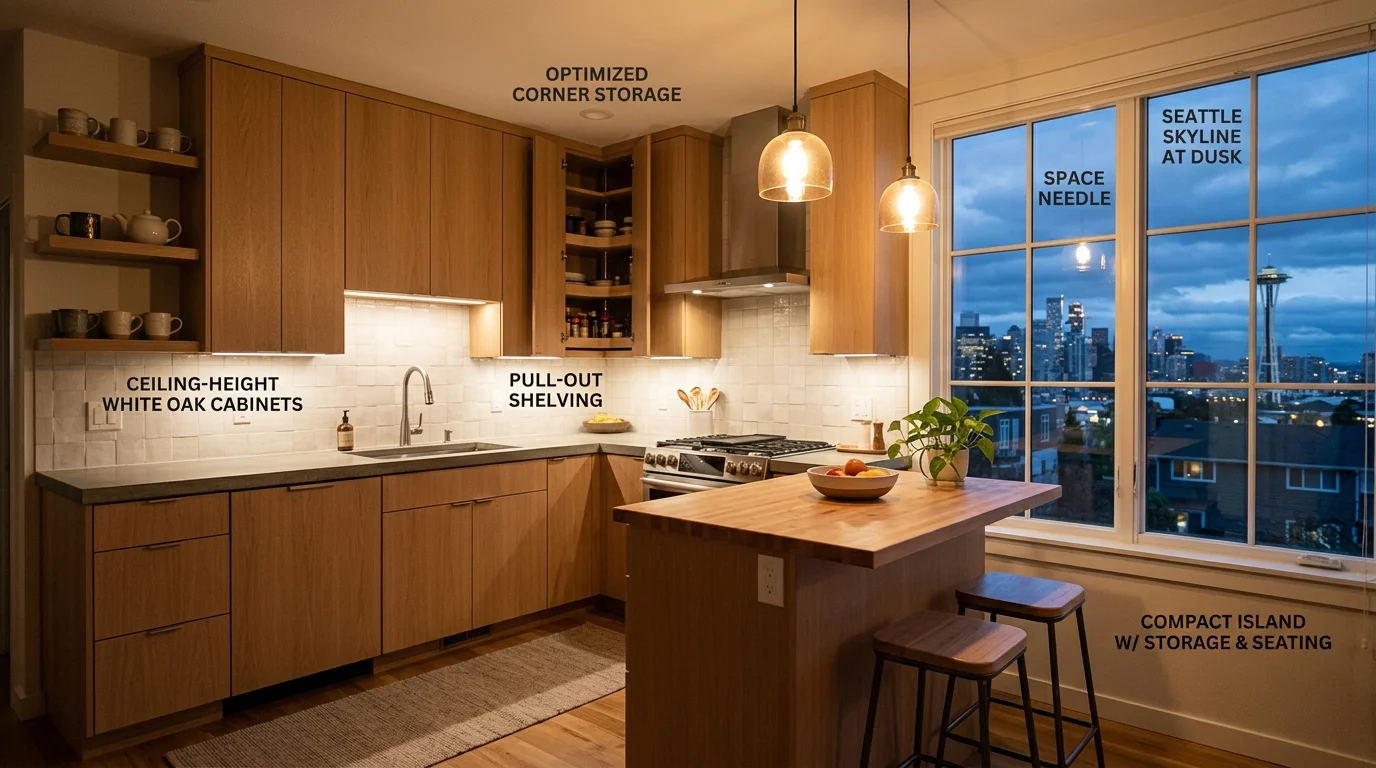
Selecting the right cabinets for a small Seattle kitchen ultimately depends on three interconnected factors: your budget, your timeline, and your design vision. Stock options deliver speed and affordability—perfect if you're working within tight constraints and can accept standard dimensions. Semi-custom cabinets strike a practical middle ground, offering flexibility in finishes and configurations without the premium pricing of fully custom builds. Custom cabinetry, while the most expensive route, provides precision tailoring for awkward spaces and ensures your design perfectly reflects Pacific Northwest aesthetics.
The moisture-rich climate here demands materials and finishes that resist warping and degradation. Whether you choose solid wood, plywood, or engineered options, prioritize quality hardware and proper ventilation to protect your investment. Consider cabinet refacing as a cost-effective alternative if your existing cabinets are structurally sound but visually dated—this approach delivers dramatic transformation at a fraction of replacement costs.
The best decision isn't about picking the "right" category in isolation. It's about aligning your choice with your home's specific constraints, your lifestyle, and your long-term plans. A licensed local remodeling professional can assess your kitchen's layout, moisture patterns, and structural considerations to recommend the option that delivers the most value for your situation. Ready to move forward? Reach out to PNW Standard Remodel for a free estimate and expert guidance tailored to your Seattle home.